
New USCIS AOS Policy Memo: A Major Shift That Could Force Green Card Applicants to Leave the U.S.
New USCIS AOS Policy Memo: A Major Shift That Could Force Green Card Applicants to Leave the U.S.
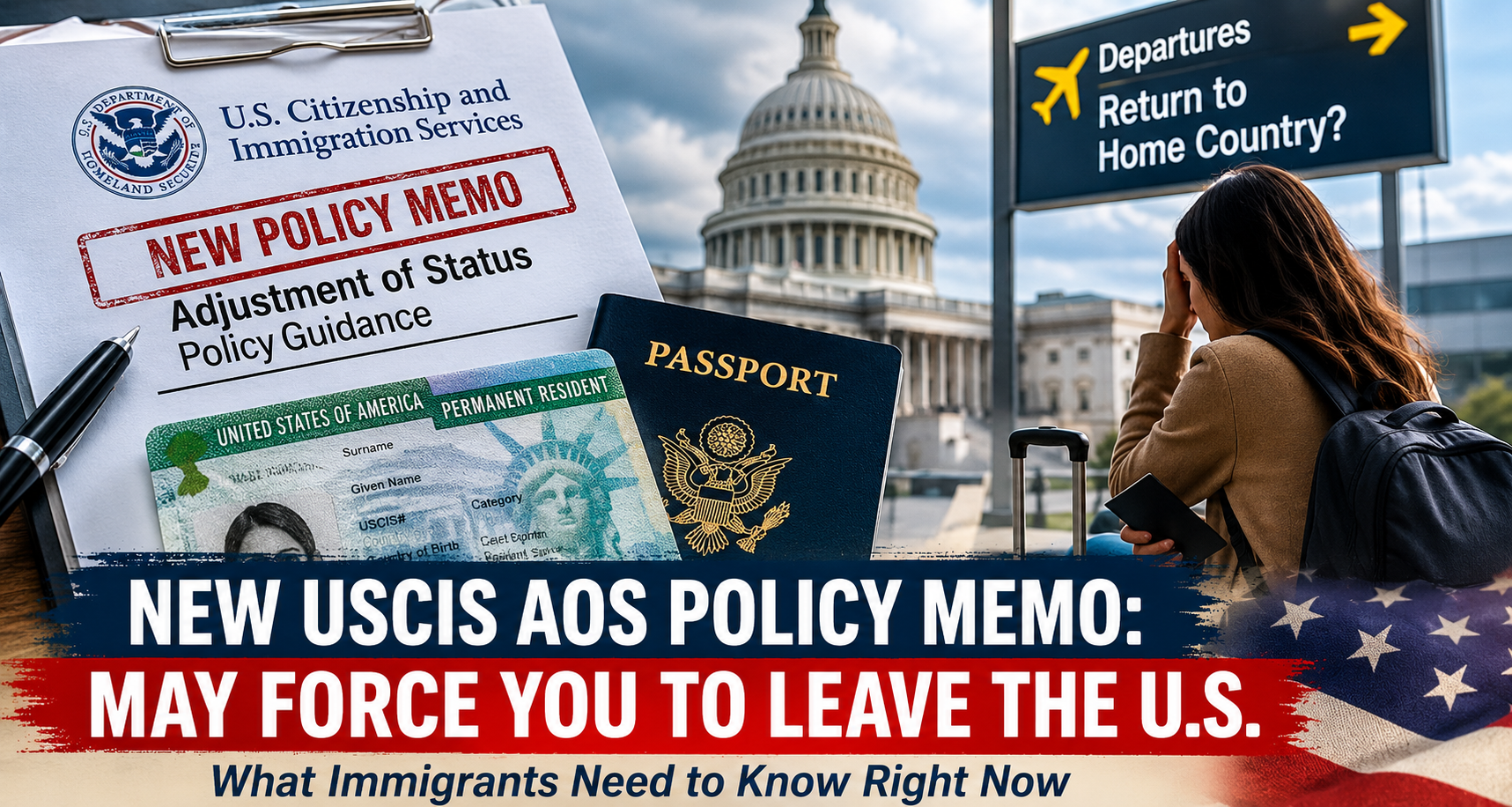
The immigration system in the United States may be facing one of the most dramatic policy shifts in years. USCIS has announced a new policy memo that could severely restrict Adjustment of Status (“AOS”) applications filed inside the United States and push many applicants into consular processing abroad instead.
If implemented aggressively, this policy could affect students, H-1B workers, tourists, family-based applicants, employment-based applicants, and many others who traditionally relied on Adjustment of Status to obtain lawful permanent residence without leaving the United States.
As a New York immigration lawyer, I believe this memo creates enormous uncertainty and potential danger for immigrants and their families.
What Is the New USCIS AOS Policy Memo?
USCIS announced a policy memo stating that individuals seeking permanent residence should generally apply for immigrant visas through U.S. consulates abroad rather than through Adjustment of Status inside the United States.
According to USCIS:
“An alien who is in the U.S. temporarily and wants a Green Card must return to their home country to apply, except in extraordinary circumstances.”
This statement represents a major departure from how Adjustment of Status has functioned in practice for decades.
The agency claims that the law was always intended to favor consular processing and that Adjustment of Status should be treated as an “extraordinary form of relief.”
What Is Adjustment of Status?
Adjustment of Status (AOS) is the process that allows eligible immigrants already inside the United States to apply for a green card without leaving the country.
Historically, many immigrants have relied on AOS because it offers critical protections, including:
- Remaining with family in the U.S.
- Continuing employment authorization
- Receiving travel authorization
- Avoiding dangerous consular interviews abroad
- Avoiding unlawful presence bars triggered by departure
For decades, AOS has been a cornerstone of U.S. immigration law.
Now, USCIS appears to be attempting to narrow its availability significantly.
Why This New USCIS AOS Policy Memo Is So Concerning
This new policy memo could create devastating consequences for immigrants.
- Increased Risk of Visa Denials Abroad
Consular processing carries enormous risks.
When applicants leave the United States for immigrant visa interviews abroad, they may face:
- Visa denials
- Administrative processing delays
- Security checks
- Allegations of fraud or misrepresentation
- Unlawful presence bars
- Difficulty returning to the U.S.
Unlike USCIS decisions inside the United States, consular decisions are often extremely difficult to challenge.
- Families Could Be Separated for Months or Years
One of the biggest dangers of this policy is family separation.
If applicants are forced to process abroad, spouses and children could remain separated while waiting for visa approvals.
Consular delays at some U.S. embassies already stretch for months or years.
- Employment-Based Immigrants Could Face Major Disruption
Employment-based immigrants — including H-1B workers, L-1 executives, O-1 visa holders, and EB2 NIW applicants — may suddenly face uncertainty regarding whether they can adjust status in the U.S.
This could disrupt:
- Careers
- Employers
- Work authorization
- Business operations
- Long-term immigration planning
For highly skilled immigrants, this policy creates instability at a time when the U.S. economy depends heavily on international talent.
Does Immigration Law Actually Require This?
USCIS argues that the law historically intended immigrants to process abroad.
However, Adjustment of Status has existed in immigration law for decades under INA §245.
Congress specifically created Adjustment of Status to allow eligible applicants already inside the U.S. to obtain permanent residence without consular processing.
Courts and immigration agencies have long recognized Adjustment of Status as a lawful and essential immigration benefit.
The new memo may lead to future litigation and legal challenges if USCIS attempts to deny otherwise eligible AOS applications systematically. However, many applicants from countries that are on “ban” list will not be able to receive immigrant visas overseas! In addition, certain immediate relatives will require a waiver for their visa to be issued due to unlawful presence bars that do not apply unless a person leaves the United States!
Who Could Be Affected?
Potentially affected groups include people who are planning on filing and who have pending adjustment of status applications:
- Marriage-based green card applicants
- Employment-based applicants
- H-1B visa holders
- F-1 students
- Tourists who later become eligible for residency
- EB1 applicants
- EB2 NIW applicants
- Adjustment applicants with pending I-485 applications
- Family-sponsored immigrants
Each case will likely depend on how USCIS officers interpret “extraordinary circumstances.”
That creates uncertainty and inconsistency.
These case should be exempted from this new prohibition: adjustment based on U, T visas, asylum and SIJ.
What Should Immigrants Do Right Now?
If you are considering filing for Adjustment of Status, this is not the time to delay.
A qualified New York immigration lawyer can evaluate:
- Whether you remain eligible for AOS
- Risks of consular processing
- Timing strategies
- Waiver eligibility
- Potential inadmissibility issues
- Emergency filing options
Every immigration case is unique, and this new USCIS AOS policy memo could have life-changing consequences.
Can USCIS Really Change the System This Dramatically?
That remains unclear.
While USCIS can issue policy guidance, federal immigration statutes still govern Adjustment of Status eligibility.
If USCIS officers begin denying AOS applications broadly based on this memo, lawsuits and federal court challenges are likely to follow.
Immigration law is often shaped through litigation, and future court decisions may limit how aggressively USCIS can enforce this policy.
Final Thoughts From a New York Immigration Lawyer
This new USCIS AOS policy memo may become one of the most controversial immigration developments in recent years.
For decades, Adjustment of Status allowed immigrants to build stable lives in the United States while pursuing lawful permanent residence.
Now USCIS appears determined to narrow that pathway dramatically.
If you are planning to file for a green card, already have a pending I-485, or may be affected by consular processing requirements, you should seek legal advice immediately.
Immigration policy is changing rapidly, and mistakes can have permanent consequences.
Speak With an Experienced New York Immigration Lawyer
If you are concerned about how the new USCIS AOS policy memo may affect your case, contact our office today.
Law Office of Alena Shautsova
New York Immigration Lawyer
🌐 www.shautsova.com
📞 917-885-2261
We represent immigrants nationwide in:
- Adjustment of Status
- Consular processing
- Employment-based immigration
- EB2 NIW
- Asylum
- Waivers
- Deportation defense
- Family immigration cases


