
Trump’s New Deportation Strategy: Employer Raids, Historical Lessons, and What It Means for You
Trump’s New Deportation Strategy: Employer Raids, Historical Lessons, and What It Means for You
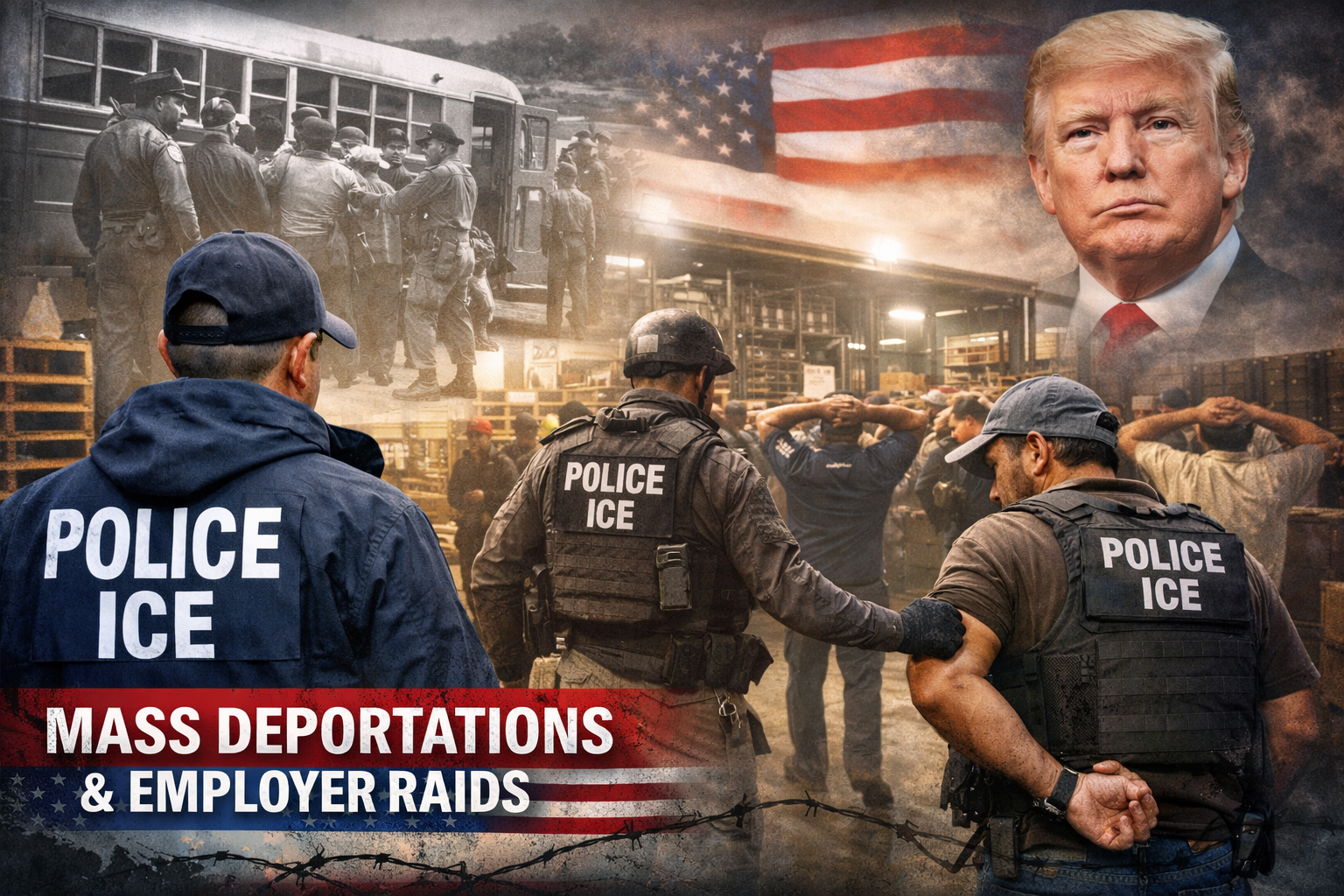
If you are living or working in the United States as an immigrant—or employing immigrant workers—you need to pay close attention to a major development in immigration policy discussions.
Recent reporting indicates that allies of former President Donald Trump are proposing a new large-scale deportation strategy. One of the central elements of this plan is a renewed focus on raiding workplaces and targeting employers as a way to identify and remove undocumented workers. While this may sound like a new approach, it is not. In fact, it echoes one of the most controversial immigration enforcement campaigns in U.S. history.
Let’s talk about what this means, what history teaches us, and how you can protect yourself.
A Shift Toward Employer-Focused Enforcement
The idea behind workplace raids is simple: instead of only targeting individuals, the government enforces immigration law by going directly to places of employment—factories, farms, construction sites, restaurants—and conducting arrests there.
Supporters of this strategy argue that it addresses the “pull factor” of illegal immigration—jobs. But in reality, workplace enforcement has always been complex, expensive, and legally sensitive.
Historically, these operations tend to result in:
- Sudden arrests of large numbers of workers
- Family separations
- Business disruptions
- Legal challenges regarding due process and labor rights
There is also a critical legal issue: employers often face fewer consequences than workers, even though they are part of the hiring process.
The Historical Parallel: Eisenhower’s “Operation Wetback”
To understand where this strategy may lead, we need to look back at the 1950s.
During President Dwight D. Eisenhower’s administration, the U.S. government carried out a massive deportation campaign known as Operation Wetback. This program relied heavily on enforcement sweeps, including workplace targeting, to remove undocumented Mexican immigrants.
Estimates suggest that up to 1.3 million people were deported during this campaign.
At first glance, some policymakers point to these numbers as evidence of “success.” But the reality is much more complicated—and troubling.
What actually happened?
- Mass Roundups and Civil Rights Concerns
Many individuals were detained and deported without proper hearings. U.S. citizens and legal residents were sometimes mistakenly caught up in enforcement actions. - Humanitarian Issues
Deportees were often transported in harsh conditions. Historical accounts describe overcrowded buses and ships, with little regard for safety or dignity. - Temporary Effects, Not Lasting Solutions
Despite the scale of deportations, the underlying economic demand for labor did not disappear. Workers eventually returned, and employers continued to rely on immigrant labor. - Long-Term Reputation Damage
The program is widely criticized today by historians and legal scholars as an example of enforcement that prioritized numbers over rights and long-term policy solutions.
As modern analysis points out, even large-scale deportation promises are often “undercut by history”, meaning they fail to achieve their intended long-term impact.
Why This Matters Today
If workplace raids expand again, the consequences will not be theoretical—they will be immediate and personal.
If you are an immigrant:
- You may face increased risk of arrest at your job
- Your workplace may become a target of enforcement actions
- You could be detained without warning during a raid
If you are an employer:
- You may face I-9 audits, fines, or even criminal liability
- Your business operations could be disrupted overnight
- You may lose key employees suddenly, affecting productivity
If you are a family member:
- Workplace raids often lead to family separation, especially when parents are detained
Economic Reality: Enforcement Alone Does Not Work
There is also an economic argument that cannot be ignored.
Large-scale deportation efforts can harm industries that depend on immigrant labor, including agriculture, construction, and service sectors. Some economists warn that such policies could negatively impact U.S. workers and the broader economy, rather than protect them [1].
This is exactly what history showed during the Eisenhower era: removing workers did not eliminate demand—it simply disrupted the system.
Your Legal Rights During Workplace Enforcement
This is where knowledge becomes power.
If enforcement increases, you must be prepared.
Know these critical rights:
- You have the right to remain silent
You do not have to answer questions about your immigration status. - You have the right to a warrant
ICE cannot enter private areas of a workplace without a valid judicial warrant. - You have the right to speak to a lawyer
Never sign documents without understanding them. - Employers must follow verification rules—but also protect employees’ rights
Over-discrimination or improper document demands can lead to legal liability.
Practical Steps You Should Take Now
Preparation is not panic—it is protection.
- Review your immigration status and documents
- Make sure your employer is compliant with I-9 requirements
- Create a family safety plan
- Keep contact information for an experienced immigration attorney
- Do not rely on rumors—get accurate legal advice
Final Thoughts: History Is a Warning, Not a Blueprint
When policymakers look to the past for solutions, it is critical to understand the full picture—not just the numbers.
Operation Wetback is often cited as an example of “effective enforcement.” But the historical record tells a different story: civil rights violations, temporary results, and long-term failure to address the root causes of migration.
If similar strategies return today, they will likely raise the same legal, humanitarian, and economic concerns.
You do not have to face this uncertainty alone. The most important thing you can do right now is stay informed and take proactive steps to protect yourself, your family, and your business.
If you have concerns about your immigration status or workplace compliance, act early.
📞 Call: 917-885-2261
🌐 Visit: shautsova.com


