
How Minnesotans’ Resistance Changed the ICE Surge — And What It Means for Immigration Enforcement
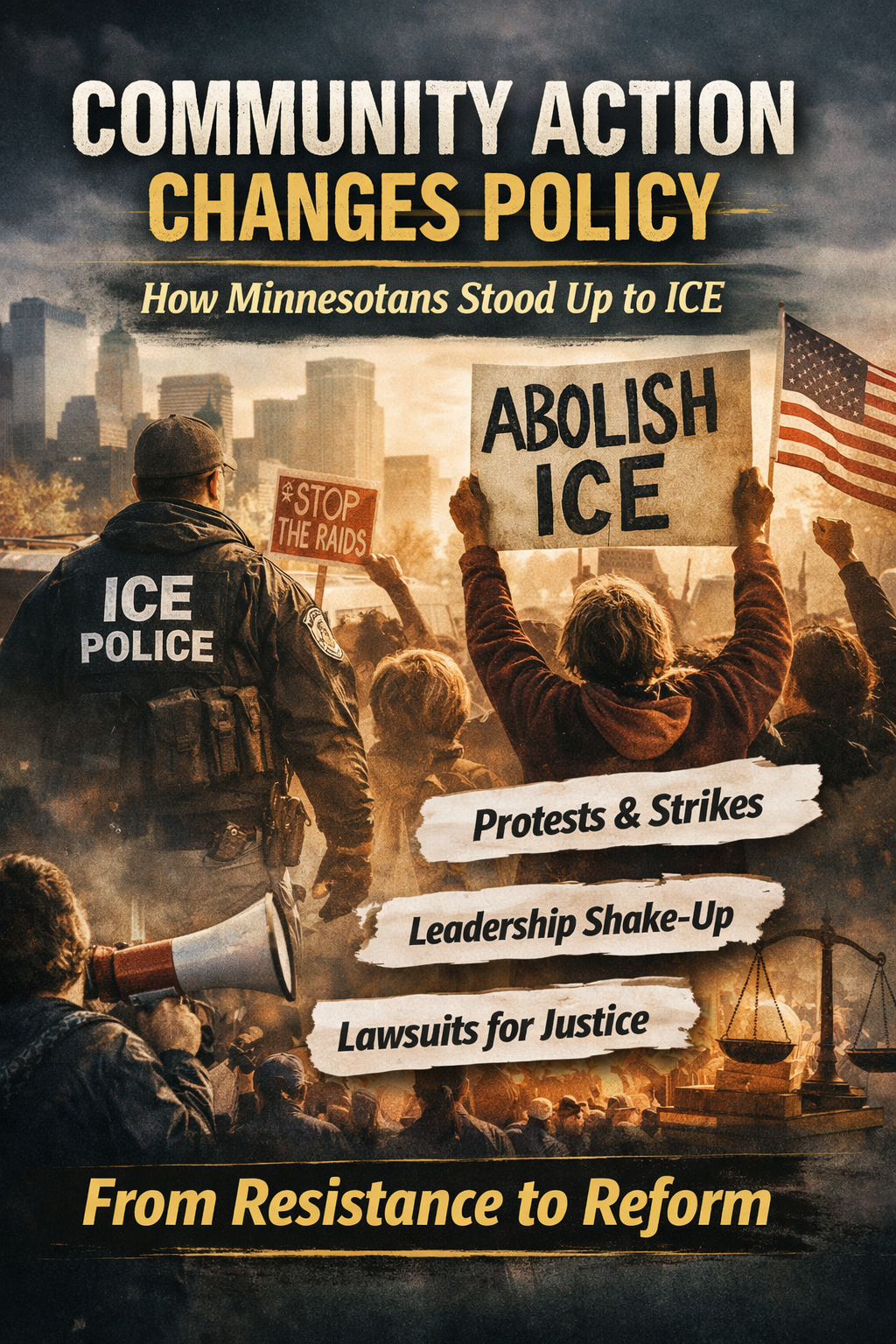
Immigrant communities, everyday Minnesotans, labor unions, clergy, activists, local leaders, and nationwide supporters did not stand down when the federal government sent thousands of ICE and Border Patrol agents into Minneapolis and the Twin Cities — and their public pressure has already made a difference. What began as one of the most aggressive immigration enforcement operations in recent U.S. history has been met with sustained protest, multiple lawsuits, and political pushback that are reshaping how enforcement is being carried out — and forcing the federal government to respond and adjust its tactics in ways that reflect public concern and community values.
Today, it’s clear that grassroots activism matters: communities across Minnesota have forced leadership changes, secured promises of reform from federal officials, and generated national attention that has slowed and scrutinized dangerous federal enforcement methods that previously faced minimal oversight.
Below is a comprehensive, immigration-lawyer-style breakdown of what happened, why it matters, the legal battles underway, and how community pressure played a central role in driving accountability.
Background: “Operation Metro Surge” and Escalating Federal Enforcement
Beginning in December 2025, the Trump administration launched what the Department of Homeland Security described as the largest immigration enforcement operation ever carried out — dubbed Operation Metro Surge — deploying thousands of ICE and Border Patrol agents into Minnesota, especially Minneapolis and St. Paul. The official purpose was to apprehend undocumented immigrants and expand deportation efforts. However, reports quickly documented an escalation in aggressive tactics, broad detentions (including of U.S. citizens), and confrontations with residents and observers.
Amid this deployment:
- At least 3,000 people were arrested under the operation, according to federal reporting.
- Two U.S. citizens — Renée Nicole Good and Alex Jeffrey Pretti — were fatally shot by Border Patrol and ICE agents on Minneapolis streets in January 2026, triggering outrage and nationwide protests.
Timeline of Key Events — What Happened and When
Here is a detailed timeline showing how the situation in Minnesota evolved from federal surge to mass protests, leadership change, and legal action:
December 2025
- Federal enforcement expands into Minneapolis and greater Minnesota under Operation Metro Surge.
- Residents begin recording federal activity and report confrontations, arrests, and forceful detentions.
January 7, 2026
- ICE agent Jonathan Ross fatally shoots Renée Good in Minneapolis. Her death sparks immediate protests and demands for accountability.
January 12, 2026
- Minnesota Attorney General Keith Ellison, along with the cities of Minneapolis and St. Paul, files a federal lawsuit against the Department of Homeland Security and related agencies (including ICE and CBP), asking a court to end the unprecedented surge of agents and declare it unconstitutional and unlawful.
January 15–16, 2026
- The American Civil Liberties Union (ACLU) files class-action lawsuits alleging unconstitutional actions by ICE, including racial profiling, unlawful detention, and retaliation against peaceful observers.
- A federal judge imposes a preliminary injunction in one ACLU suit, limiting how federal agents can respond to peaceful protests — though the administration later appealed that order.
January 23, 2026
- A statewide general strike unites labor unions, community groups, faith leaders, and activists to oppose the ICE operations — one of the largest demonstrations in decades.
January 24, 2026
- Alex Pretti is fatally shot by federal agents in Minneapolis amid protests. His death further fueled public outrage and amplified calls for federal accountability.
January 26–27, 2026
- The federal government announces that Tom Homan — a senior immigration official — will oversee enforcement adjustments in Minnesota, focusing on “selective” operations and promising improved safety and communication with local leaders, acknowledging past tactics were flawed.
- Leadership connected to the prior enforcement surge, including ICE Border Patrol Commander Gregory Bovino, loses operational prominence amid mounting criticism. (While the White House initially defended leadership actions, public pressure contributed to his diminished role.)
Late January 2026
- Oral arguments in the Minnesota lawsuit against DHS proceed in federal court; a judge orders the government to address core legal questions about the motivations behind the surge and whether it unlawfully pressures the state government.
Public Pressure Changed the Narrative — Not Just the Newsfeed
Thousands of Minnesotans didn’t just protest — they organized strategically, galvanized union support, coordinated legal resistance, and drew national attention to federal overreach. This sustained resistance mattered:
- Federal Response and Operational Adjustment
After weeks of protests, high-profile shootings, and political pushback, federal officials acknowledged problems in enforcement execution, and leadership tied to the operation was repositioned. Leaders like Tom Homan publicly stated they would remain in Minneapolis to help de-escalate tensions and adopt more focused enforcement — signaling a shift from broad, aggressive tactics to more targeted approaches.
- Legal Constraints on ICE Activity
Multiple lawsuits — including from the State of Minnesota, Minneapolis, St. Paul, and the ACLU — have forced federal courts to scrutinize ICE tactics and limit abusive enforcement behavior. A federal judge’s preliminary injunction restricted agents from using crowd-control tools against peaceful demonstrators and barred detentions of non-interfering motorists during enforcement — real legal limits created by public legal action.
- Political and Public Accountability
Minnesota’s lawsuit hasn’t just targeted ICE deployments — it argues the operation violates constitutional principles like the Tenth Amendment by unilaterally overturning state sovereignty and commandeering local resources.
Public pressure, protests, general strikes, and legal challenges forced this onto the national agenda — becoming a focal point for immigration policy debate across the country.
What’s Happening With the Lawsuits Now?
Here’s the status of major legal actions tied to the Minnesota enforcement surge:
State & Local Government Lawsuit vs. DHS
- Filed January 12, 2026 by Minnesota, Minneapolis, and St. Paul.
- Seeks to halt or limit Operation Metro Surge and reduce federal enforcement back to prior levels.
- U.S. District Judge Katherine Menendez has heard oral arguments and ordered the Trump administration to explain its motives for the operation in court filings — a significant step in assessing whether the surge is lawful or punitive.
ACLU Class-Action Lawsuits
- The ACLU filed multiple lawsuits alleging constitutional violations (including unlawful stops, profiling, and retaliation against protestors).
- Judges have at least temporarily limited certain enforcement tactics, though appeals and further proceedings are ongoing as the government contests those rulings.
Nationwide Legal Impact
- Other jurisdictions, like Illinois and Chicago, have filed similar legal challenges, arguing the federal enforcement model used in Minnesota sets a dangerous precedent.
These lawsuits aren’t symbolic — they are forcing federal law enforcement and the judiciary to define limits on how immigration policy is enforced in practice.
Why This Matters for Immigrants and Advocates Across the U.S.
As an immigration attorney, I know firsthand that policies are most powerful not when dictated from afar, but when communities actively claim their rights and push back against harmful practices. The Minnesota experience shows that:
- Public resistance can shape federal behavior — enforcement leaders may be replaced, tactics revised, and operations limited when communities speak up and organize.
- Lawsuits can impose real legal boundaries on overzealous enforcement actions that jeopardize civil liberties.
- Coordinated legal, political, and community advocacy can protect vulnerable populations and force government accountability.
If you’re affected by immigration enforcement or know someone who is, know your rights, document any interactions, stay connected with legal advocates, and don’t underestimate the power of collective action — your voice can make a difference.
Need Help Navigating Immigration Enforcement or Legal Challenges?
I’m Alena Shautsova, an experienced immigration lawyer focusing on defending people facing federal enforcement and helping families understand their rights in high-stakes situations. If you or someone you care about is dealing with ICE, CBP, or federal immigration legal issues, contact my office for guidance and advocacy.
📞 Call or text: 917-885-2261
📄 Website: shautsova.com
Together, we’ll protect your rights — and make sure your voice is heard.


