
Two Important New BIA Decisions in 2026: What Immigrants Need to Know About Motions to Reopen, Stays of Removal, and Sua Sponte Reopening
Two Important New BIA Decisions in 2026: What Immigrants Need to Know About Motions to Reopen, Stays of Removal, and Sua Sponte Reopening
By Alena Shautsova, New York Immigration Lawyer
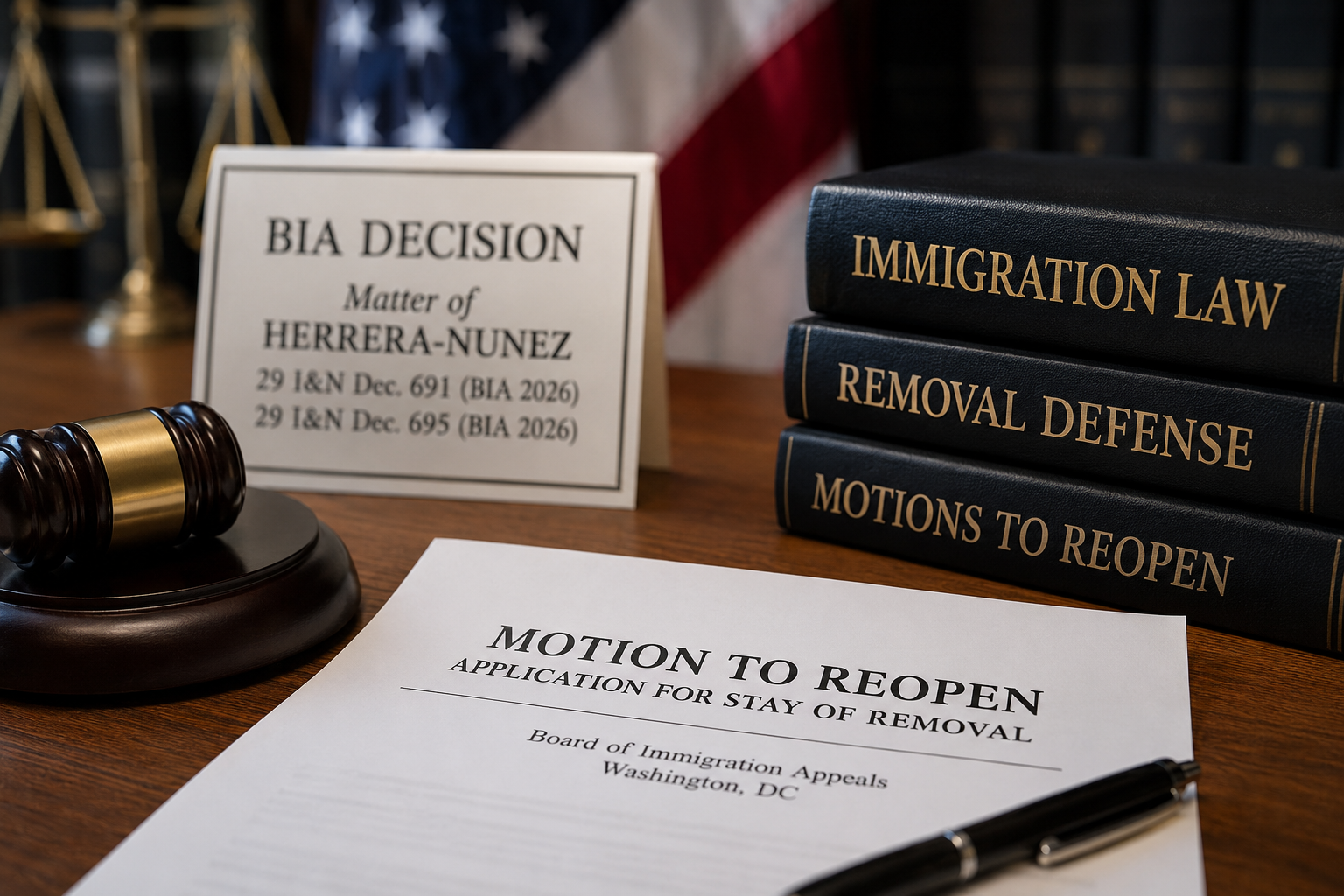
If you are facing deportation, detention, or have a final order of removal, two recent Board of Immigration Appeals (BIA) decisions may significantly affect your options. In Matter of Herrera-Nunez, 29 I&N Dec. 691 (BIA 2026) and Matter of Herrera-Nunez, 29 I&N Dec. 695 (BIA 2026), the BIA clarified important procedural requirements regarding stays of removal and limited the circumstances under which it will reopen a case on its own motion.
These decisions are especially important if you are in immigration detention, have already received a final removal order, or are planning to file a motion to reopen your immigration case. Understanding these rulings can help you avoid costly mistakes and increase your chances of remaining in the United States while your case is pending.
In this article, you will learn:
- What the new BIA decisions mean
- How to request a stay of removal properly
- When the BIA may refuse to reopen a case
- Practical tips for filing motions to reopen
- What detained immigrants should do immediately
- How a New York immigration lawyer can help protect your rights
Immigration News: Matter of Herrera-Nunez, 29 I&N Dec. 691 (BIA 2026)
The Holding
In this decision, the BIA held:
An alien subject to a final removal order should first request a stay from the Department of Homeland Security (DHS) before the Board considers a stay request filed together with a motion to reopen or reconsider.
This may appear procedural, but it has major consequences.
For years, many immigrants filed motions to reopen with the BIA and simultaneously requested a stay of removal from the Board. The BIA has now clarified that it expects individuals to first seek relief from DHS before asking the Board to intervene.
Why This Matters
When you have a final order of removal, Immigration and Customs Enforcement (ICE) generally has authority to execute that order and remove you from the United States.
Even if you file a motion to reopen, the filing alone does not automatically stop deportation.
Without a stay of removal, ICE may deport you before the BIA decides your motion.
The new decision signals that the BIA wants DHS to consider a stay request first before the Board becomes involved.
What Is a Stay of Removal?
A stay of removal is a temporary order preventing DHS from removing you while your case remains pending.
A stay can be critical if:
- You have filed a motion to reopen.
- New evidence has become available.
- You are seeking asylum based on changed country conditions.
- You recently became eligible for immigration benefits.
- You are pursuing federal court litigation.
Without a stay, deportation can occur even while important legal proceedings are underway.
Practical Steps to Request a Stay of Removal
Step 1: File a Stay Request with DHS
Before approaching the BIA, submit a stay request directly to DHS or ICE.
Depending on your circumstances, this may include:
- Form I-246, Application for Stay of Removal
- Supporting documentation
- Evidence of humanitarian factors
- Evidence supporting your motion to reopen
Common supporting evidence includes:
- Medical records
- Family hardship evidence
- Evidence of changed country conditions
- Approved petitions
- Evidence of eligibility for immigration relief
Step 2: Document DHS Response
Keep proof that you requested a stay.
Examples include:
- Filing receipts
- Email confirmations
- Delivery confirmations
- Written denials
If DHS denies the request or fails to act, this documentation may become important when seeking relief from the BIA.
Step 3: File Motion to Reopen with Supporting Stay Request
When filing with the BIA, explain:
- That you sought relief from DHS first
- The result of the request
- Why a stay remains necessary
The Board’s new decision suggests this procedural history may become increasingly important.
What If You Are in Immigration Detention?
Detained immigrants face unique challenges.
If you are detained and subject to a final order:
Act Immediately
Time is critical.
ICE can schedule removal with little notice.
You should:
- Consult an experienced immigration attorney immediately.
- Gather supporting evidence quickly.
- Prepare stay requests simultaneously with reopening efforts.
Do Not Assume Filing Stops Deportation
One of the most dangerous misconceptions in immigration law is believing that filing a motion automatically stops removal.
In most situations, it does not.
Always evaluate whether a separate stay request is required.
Maintain Contact with Family
Family members often play an essential role by:
- Collecting evidence
- Securing legal representation
- Monitoring case developments
- Communicating with detention facilities
Immigration News: Matter of Herrera-Nunez, 29 I&N Dec. 695 (BIA 2026)
The Holding
In a separate decision issued the same year, the BIA held:
A respondent did not establish an exceptional situation warranting sua sponte reopening where his equities were acquired years after he was ordered removed from the United States.
This ruling addresses one of the most difficult forms of immigration relief: sua sponte reopening.
What Is Sua Sponte Reopening?
“Sua sponte” means “on its own motion.”
Normally, motions to reopen must satisfy strict deadlines and procedural requirements.
However, in rare circumstances, the BIA may reopen a case on its own initiative.
This authority is discretionary and reserved for truly exceptional situations.
The Board repeatedly emphasizes that sua sponte reopening is not intended to serve as a general remedy for missed deadlines.
Why the Respondent Lost
In Herrera-Nunez, the respondent relied on favorable equities that developed years after the removal order became final.
These included factors accumulated after the order, such as:
- Family ties
- Community involvement
- Positive personal developments
The Board found these circumstances insufficient to establish the type of exceptional situation required for sua sponte reopening.
Key Lesson
Simply becoming a good candidate for relief after a removal order is not enough.
The BIA expects something extraordinary beyond ordinary positive equities.
What Qualifies as Exceptional Circumstances?
The Board has never created a comprehensive definition, but examples may include:
Significant Changes in Law
A major legal development that fundamentally alters eligibility for relief.
Fundamental Procedural Errors
Cases involving serious due process violations.
Extraordinary New Evidence
Evidence that could not reasonably have been discovered earlier and would likely change the outcome.
Government Error
Administrative mistakes affecting the fairness of proceedings.
Even in these situations, reopening remains discretionary.
Practical Tips for Filing a Motion to Reopen
Focus on Legal Grounds
Many immigrants emphasize sympathy and hardship.
While these factors matter, successful motions usually focus on legal arguments.
Ask:
- Was there ineffective assistance of counsel?
- Did country conditions change?
- Is there newly discovered evidence?
- Did the immigration court commit legal error?
Gather Strong Documentation
Provide evidence supporting every claim.
Examples include:
- Country reports
- Expert declarations
- Medical records
- Affidavits
- Court documents
- Government records
Explain Timeliness
If filing after the normal deadline, clearly explain why an exception applies.
Potential exceptions include:
- Changed country conditions
- Lack of notice
- Equitable tolling
- Ineffective assistance of counsel
Avoid Relying Solely on Positive Equities
The second Herrera-Nunez decision sends a clear message.
Marriage, children, employment history, and community involvement may not be enough if acquired long after the removal order.
You should connect these facts to a legally recognized basis for reopening whenever possible.
How These Decisions Affect New York Immigrants
New York has one of the largest immigrant populations in the United States.
Many individuals living in New York face:
- Final orders of removal
- ICE supervision
- Immigration detention
- Old removal cases
- Missed immigration court hearings
The Herrera-Nunez decisions provide important guidance.
If you are attempting to reopen an old case, you should:
- Evaluate whether a stay request should first be filed with DHS.
- Assess whether you have a legally recognized reopening ground.
- Avoid relying exclusively on positive developments that occurred years after the removal order.
- Act quickly if detention or removal becomes imminent.
Why Experienced Legal Representation Matters
Motions to reopen are among the most technically demanding filings in immigration law.
Success often depends on:
- Proper legal framing
- Strategic evidence presentation
- Compliance with procedural rules
- Timely filing
- Effective stay requests
A mistake can result in denial and possible deportation.
An experienced New York immigration lawyer can evaluate:
- Whether reopening is available
- Which exceptions apply
- Whether a stay should be sought from DHS
- Whether federal court litigation is appropriate
- Whether emergency relief is available
Final Thoughts
The BIA’s decisions in Matter of Herrera-Nunez, 29 I&N Dec. 691 (BIA 2026) and Matter of Herrera-Nunez, 29 I&N Dec. 695 (BIA 2026) provide important guidance for immigrants facing removal.
The first decision emphasizes that individuals should seek a stay from DHS before asking the BIA to grant one in connection with a motion to reopen or reconsider.
The second decision reminds immigrants that positive equities developed after a removal order generally will not, by themselves, justify the extraordinary remedy of sua sponte reopening.
If you are facing deportation, immigration detention, or have a final order of removal, acting quickly and strategically is essential. The right legal approach can make the difference between removal and another opportunity to present your case.
Need Help With a Motion to Reopen or Stay of Removal?
If you are facing removal proceedings, detention, or have received a final order of removal, contact our office to discuss your options.
Law Office of Alena Shautsova
New York Immigration Lawyer
📞 917-885-2261
🌐 www.shautsova.com
We help individuals nationwide with motions to reopen, stays of removal, asylum cases, deportation defense, federal court litigation, and complex immigration matters.


