
Alternatives to a Green Card After the Recent USCIS Memo: Understanding Your Legal Options in the United States
Alternatives to a Green Card After the Recent USCIS Memo: Understanding Your Legal Options in the United States
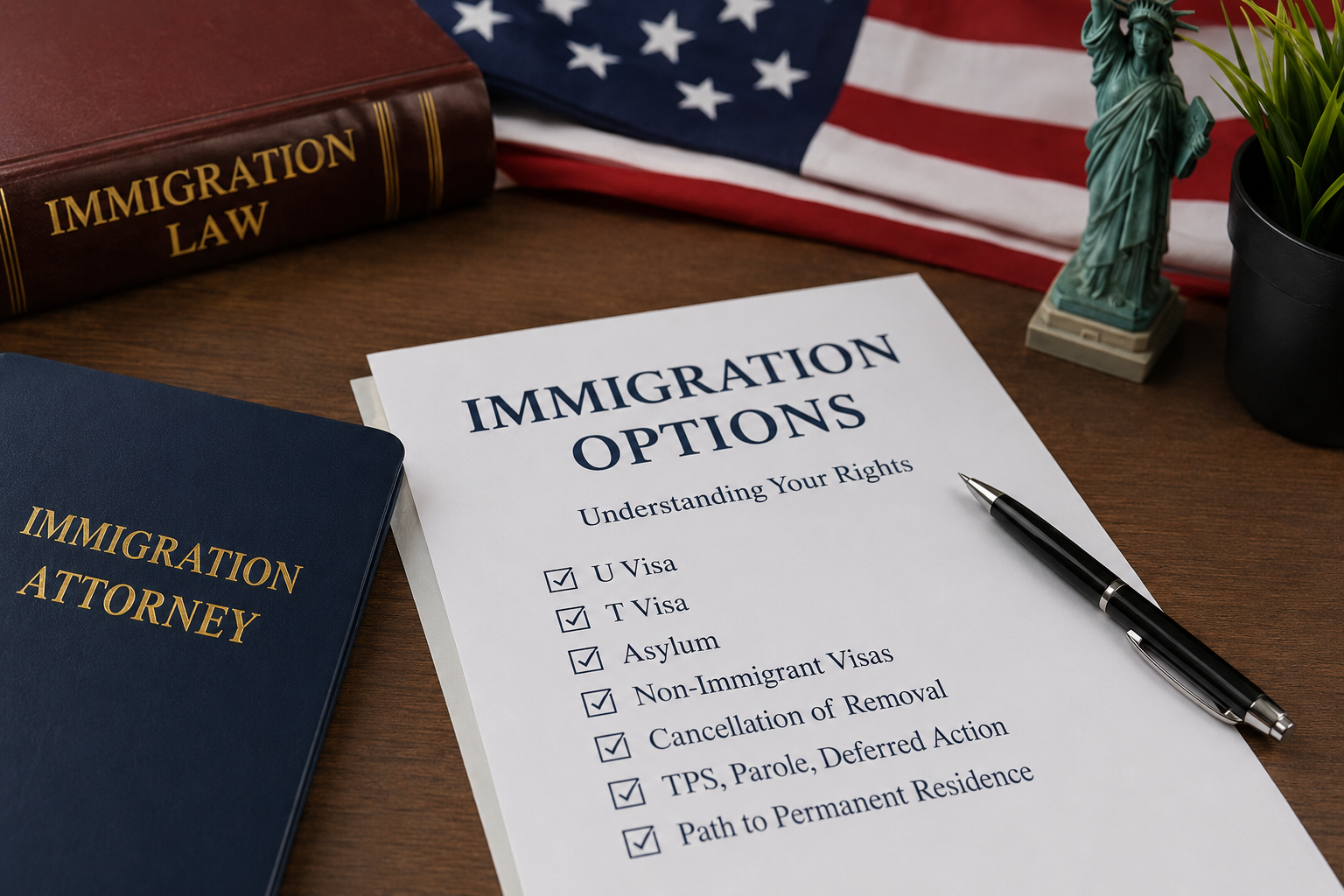
For many immigrants, the recent USCIS memo created fear, confusion, and uncertainty. Families are worried about whether they can remain in the United States legally, continue working, travel safely, or eventually obtain permanent residence.
If you are feeling anxious right now, you are not alone.
Many immigrants incorrectly believe that if adjustment of status becomes unavailable or more difficult, they have no legal options left. Fortunately, that is not true. While a green card remains the most secure and desirable immigration status short of U.S. citizenship, there are several other forms of lawful immigration status and humanitarian protection that may allow a person to remain legally in the United States, obtain work authorization, and in many cases eventually qualify for permanent residence.
The immigration system in the United States is extremely complex. Some forms of protection are temporary, while others may eventually lead to a green card. Some categories provide travel authorization, while others do not. The important thing to understand is this:
Losing one immigration option does not necessarily mean losing all immigration options.
Why a Green Card Is Still the Strongest Immigration Status
Permanent residence provides stability that temporary statuses simply cannot match. A green card allows a person to:
- Live permanently in the United States
- Work without restrictions
- Travel internationally more freely
- Petition certain family members
- Eventually apply for U.S. citizenship
Temporary protections can help people survive difficult periods, but permanent residence remains the long-term goal for most immigrants.
Still, many people today are maintaining lawful presence and building stable lives in the United States through alternative immigration statuses.
U Visa: Protection for Victims of Crime
One important humanitarian option is the U visa. Congress created the U visa to protect victims of certain crimes who assist law enforcement in the investigation or prosecution of criminal activity.
The U visa may be available to victims of:
- Domestic violence
- Assault
- Sexual abuse
- Kidnapping
- Stalking
- Extortion
- Other qualifying crimes
The victim must generally show:
- Substantial physical or emotional harm
- Cooperation with law enforcement
- A certification from a qualifying agency
The U visa provides several important protections:
- Lawful status
- Work authorization
- Protection from deportation
- Potential path to a green card after three years
USCIS information on U visas can be found here:
USCIS U Visa Information
Unfortunately, U visa processing times have become extremely long because Congress limits the number of principal U visas issued annually to 10,000. However, many applicants may still receive deferred action and work authorization while waiting.
For many survivors of abuse and violence, the U visa is not only an immigration solution but also a pathway toward safety and healing.
T Visa: Protection for Survivors of Human Trafficking
Another powerful humanitarian option is the T visa, which is designed for survivors of human trafficking.
Human trafficking cases may involve:
- Forced labor
- Domestic servitude
- Sex trafficking
- Fraudulent recruitment
- Exploitation through threats or coercion
Many trafficking victims do not initially realize they qualify for immigration protection. Some are afraid to come forward because they fear deportation or retaliation.
The T visa may provide:
- Temporary lawful status
- Work authorization
- Certain public benefits
- Protection from removal
- A path to permanent residence
USCIS has also implemented a “bona fide determination” process in some T visa cases that may allow applicants to receive work authorization and deferred action before the final case decision.
More information about T visas is available here:
USCIS T Visa Information
For trafficking survivors, immigration relief can become an essential step toward rebuilding a life with dignity and security.
Asylum and Refugee Protection
For people fleeing persecution, asylum remains one of the most important humanitarian protections available under U.S. immigration law.
Individuals may qualify for asylum if they suffered persecution or fear future persecution because of:
- Political opinion
- Religion
- Nationality
- Race
- Membership in a particular social group
An approved asylee receives:
- Lawful status
- Work authorization
- Protection from deportation
- Eligibility for a green card after one year
Refugees admitted from outside the United States receive similar protections.
For immigrants fleeing war, political repression, domestic violence, or persecution, asylum can provide not only legal protection but also emotional relief after years of fear and uncertainty.
Long-Term Nonimmigrant Visa Statuses
Many people assume temporary visas are short-lived or unstable. However, several nonimmigrant visa categories may allow people to remain legally in the United States for many years.
Examples include:
F-1 Student Visa
Students attending qualifying educational institutions may remain lawfully present while studying. Many F-1 students later transition into employment-based visas or permanent residence.
O-1 Visa
The O-1 visa is available for individuals with extraordinary ability in:
- Science
- Business
- Arts
- Education
- Athletics
For highly accomplished professionals, entrepreneurs, artists, and researchers, the O-1 visa can provide long-term lawful status and may later support an employment-based green card process.
E-2 Investor Visa
The E-2 visa allows certain foreign nationals from treaty countries to operate businesses in the United States through substantial investment.
Many E-2 visa holders successfully maintain lawful status for years through renewals while building businesses and supporting employees in the U.S.
Even though these visas are technically temporary, they may still provide stability, work authorization, and lawful presence for extended periods of time.
Cancellation of Removal: A Different Path to a Green Card
Many immigrants do not realize that Cancellation of Removal can also lead to permanent residence.
This form of relief is available in Immigration Court and differs significantly from adjustment of status.
There are several forms, including:
- Non-LPR Cancellation of Removal
- VAWA Cancellation of Removal
To qualify, applicants often must prove:
- Long-term physical presence
- Good moral character
- Exceptional hardship to qualifying relatives
- Other legal requirements
Unlike many adjustment-of-status categories where visa numbers may be immediately available, Cancellation of Removal has strict annual numerical limitations.
This creates a heartbreaking reality for many immigrants:
Even after winning their cases before an Immigration Judge, they may wait years for a visa number to become available before receiving their green cards.
That backlog can create enormous emotional stress for families already enduring years of uncertainty.
Still, for many people in removal proceedings, Cancellation of Removal remains one of the most important paths to permanent residence.
TPS, Humanitarian Parole, Deferred Action, and U4U
Temporary protections also continue to play an important role in helping immigrants remain lawfully present in the United States.
These protections may include:
- Temporary Protected Status (TPS)
- Humanitarian Parole
- Deferred Action
- Uniting for Ukraine (U4U)
TPS protects nationals of designated countries experiencing:
- War
- Natural disasters
- Extraordinary conditions
TPS often provides:
- Protection from deportation
- Employment authorization
- In some cases, travel authorization
You can review USCIS TPS information here:
USCIS TPS Information
While TPS and parole programs are temporary by nature, they can provide critical stability during dangerous global events and may create opportunities for individuals to later pursue more permanent immigration solutions.
For many Ukrainian families under U4U, TPS holders, or parole recipients, these programs have meant safety, employment, and the ability to keep families together during extremely difficult times.
The Immigration System Continues to Change
Immigration law in the United States changes constantly through:
- New USCIS policies
- Court decisions
- Executive actions
- Congressional changes
A policy memo that creates fear today may later be challenged in court, revised, or withdrawn entirely.
That is why immigrants should avoid making decisions based on panic or misinformation online.
Even when one immigration path becomes difficult, another option may still exist.
Hope Matters
Right now, many immigrants are afraid. Some worry that their futures in the United States are disappearing. Others feel overwhelmed by changing policies and long processing times.
But immigration law is rarely simple or final.
There are often alternative strategies, humanitarian protections, court remedies, waivers, and visa categories that may still provide lawful status, work authorization, and eventually permanent residence.
Most importantly, every case is unique.
An experienced immigration attorney can help evaluate:
- Current legal status
- Risks and opportunities
- Possible humanitarian protections
- Employment-based options
- Family-based strategies
- Court remedies
- Long-term green card pathways
Even temporary protection can provide precious time, stability, and hope.
And hopefully, the recent USCIS memo will ultimately be reconsidered or withdrawn.
If you are concerned about your immigration status, do not wait until it becomes an emergency. Seek individualized legal advice as early as possible.
📞 Law Office of Alena Shautsova
☎️ 917-885-2261
🌐 www.shautsova.com


