
Why You May Be Deported Before You Even Testify in Immigration Court in 2026
Why You May Be Deported Before You Even Testify in Immigration Court in 2026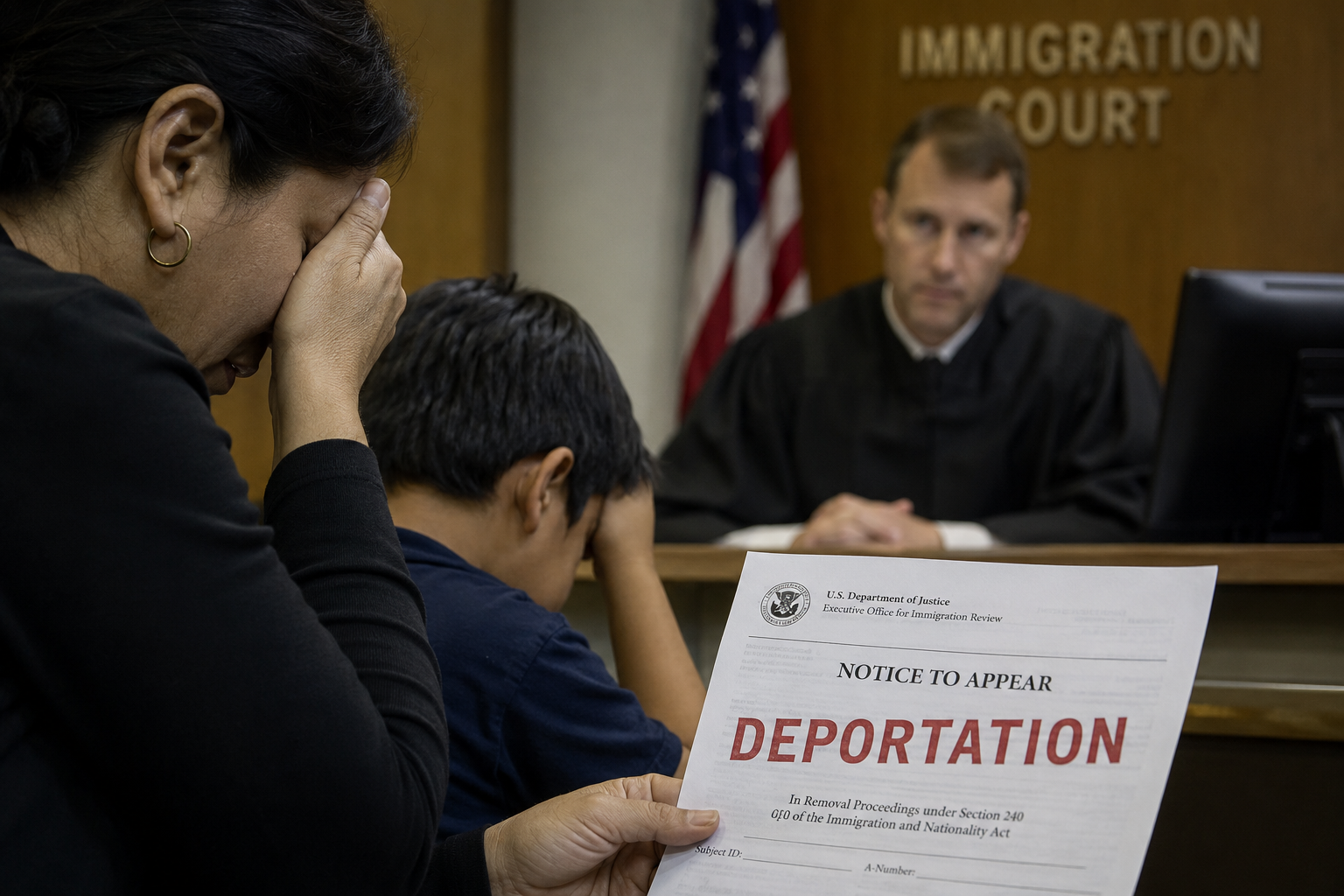
If you are in removal proceedings today, you must understand one harsh reality: many asylum cases are now being denied before the applicant even has a chance to testify in court. Immigration judges are increasingly reviewing asylum applications at the Master Calendar Hearing stage and deciding whether the case is legally sufficient on paper. If your Form I-589 is weak, incomplete, untimely, or legally defective, the judge may pretermit the case — meaning deny or dismiss it without a full individual hearing.
This is why working with an experienced New York immigration lawyer, best deportation lawyer, or asylum lawyer USA has become more important than ever.
Recent Board of Immigration Appeals (BIA) and Attorney General decisions dramatically changed how asylum claims are evaluated. Immigration courts are moving faster, scrutinizing applications more aggressively, and denying cases earlier in the process.
- Your Form I-589 Must Establish a Prima Facie Asylum Case
Today, immigration judges often begin by reviewing your written asylum application itself. If the application does not establish a legally sufficient asylum claim on its face, the judge may deny the case without hearing testimony.
This trend became especially clear after:
- Matter of H-A-A-V- (BIA 2025) (Department of Justice)
- Matter of K-E-S-G- (BIA 2025) (Department of Justice)
- Matter of S-S-F-M- (A.G. 2025) (IPTP Production)
Under these decisions, immigration judges now have broader authority to determine whether your written application already shows a valid legal basis for asylum.
In the past, many applicants expected to receive a full merits hearing where they could explain their story in person. Today, however, the court may decide:
- your proposed social group is legally invalid,
- your persecution does not fit asylum law,
- your nexus argument is weak,
- your application lacks sufficient detail,
- or your evidence does not establish prima facie eligibility.
If the judge concludes there are no disputed facts requiring testimony, your case may effectively end before trial.
Matter of H-A-A-V- Changed Everything
In Matter of H-A-A-V-, the BIA confirmed that immigration judges may pretermit asylum applications if the written filing itself fails to establish prima facie eligibility for relief. (Department of Justice)
This means your Form I-589 is no longer just a preliminary filing. It is now often treated like a legal brief that must independently establish:
- protected ground,
- nexus,
- persecution,
- inability or unwillingness of government protection,
- and eligibility under current asylum law.
A poorly prepared application can now lead directly to deportation proceedings moving forward without a meaningful opportunity to testify.
- Gender-Based and Private Violence Claims Are Facing New Attacks
Recent decisions also made many asylum cases harder to win, especially those involving:
- domestic violence,
- gender-based violence,
- generalized criminal activity,
- gang threats,
- and private actor persecution.
Matter of K-E-S-G-
In Matter of K-E-S-G-, the BIA held that social groups defined only by gender or gender plus nationality may be considered overly broad and insufficiently particular. (Department of Justice)
This ruling created major obstacles for many women seeking asylum based on gender-related persecution.
Matter of S-S-F-M-
In Matter of S-S-F-M-, the Attorney General reinstated stricter standards limiting asylum claims involving domestic violence and persecution by private actors. (Immigration Policy Tracking)
The decision effectively revived restrictive reasoning from earlier Trump-era asylum cases and narrowed protections for many survivors of abuse and gender violence. (Immigration Policy Tracking)
As a result, many asylum applicants now face heightened scrutiny regarding:
- social group formulation,
- nexus,
- government inability to protect,
- and whether the persecution is considered “private criminal conduct.”
- But Be Careful: Do Not Change Your Application Too Much
Many applicants realize too late that their original asylum application was weak. They attempt to “fix” the case by filing a substantially different I-589 later.
That strategy can be dangerous.
Under Matter of M-A-F- (2015), filing a materially different asylum application may cause USCIS or the Immigration Court to treat the new filing as a completely new application, and a conclusion that you missed your one year deadline. This can create devastating consequences, including:
- loss of the original filing date,
- one-year deadline problems,
- credibility concerns,
- allegations of fabrication,
- or inconsistencies used against you.
An experienced New York immigration lawyer must carefully evaluate whether amendments strengthen the case without fundamentally changing its core.
Small clarifications are often necessary and proper. But major changes in:
- political opinion claims,
- social groups,
- chronology,
- alleged persecution,
- or country conditions
can create credibility risks that may destroy the entire case.
- Missing the One-Year Asylum Deadline Can Destroy Your Case
One of the biggest reasons asylum seekers lose today is failure to comply with the one-year filing deadline.
Generally, asylum applicants must file Form I-589 within one year of entering the United States unless they qualify for a statutory exception.
If you miss the deadline and cannot prove:
- changed circumstances,
- extraordinary circumstances,
- or another recognized exception,
the immigration judge may deny asylum outright.
In many situations, the court may only consider:
- withholding of removal, or
- protection under the Convention Against Torture (CAT).
These forms of relief are significantly harder to win and provide fewer immigration benefits.
Unlike asylum, withholding of removal:
- does not lead to permanent residence,
- does not allow derivative benefits for family members,
- and carries a much higher legal standard.
Today, judges frequently examine the asylum filing date at early hearings. If the record clearly shows the application is untimely and unsupported by an exception, the court may move rapidly toward deportation orders.
- Asylum Cooperative Agreements May Result in Deportation to Third Countries
Another alarming development involves Asylum Cooperative Agreements (ACAs) and third-country removal policies.
Some migrants who entered the United States after 2020 may face transfer or removal to countries other than their own if the government determines they could seek protection there.
Historically and recently, the United States has pursued or revived agreements and removal frameworks involving countries such as:
- Guatemala,
- Honduras,
- Uganda,
- and potentially additional partner countries. (cgrs.uclawsf.edu)
Costa Rica has also been discussed in migration cooperation contexts, although policies continue to evolve.
These agreements are highly controversial and legally complex. In some situations, individuals may be ordered removed to countries where they have never lived and have no family or support network.
This means that an asylum applicant from one country could potentially face deportation not only back home, but also to a designated “safe third country.”
Because these policies change rapidly through DHS notices, litigation, and executive actions, every asylum applicant should consult an experienced asylum lawyer USA immediately to determine whether ACA-related risks apply.
- Immigration Judges Are Under Pressure to Move Cases Faster
Modern immigration courts are facing enormous political and administrative pressure to reduce backlogs.
As a result:
- judges are scrutinizing filings earlier,
- DHS attorneys are filing more motions to pretermit,
- weak applications are being targeted aggressively,
- and procedural mistakes are punished more quickly.
Today, immigration court is no longer a place where applicants can “explain everything later.” Your case must often be legally solid from the beginning.
Your written application should clearly establish:
- protected ground,
- nexus,
- past persecution or well-founded fear,
- country conditions,
- legal theory,
- corroborating evidence,
- and timeliness.
If these issues are not properly addressed, the judge may never allow full testimony.
- Why You Need the Best Deportation Lawyer Immediately
Many people wait too long before hiring counsel. By the time they seek help:
- deadlines have passed,
- applications contain fatal inconsistencies,
- evidence is missing,
- or the case has already been pretermitted.
A skilled best deportation lawyer or New York immigration lawyer can help:
- prepare a legally sufficient I-589,
- avoid credibility problems,
- preserve one-year filing exceptions,
- formulate valid social groups,
- respond to motions to pretermit,
- gather expert evidence,
- and defend against removal aggressively.
The reality today is harsh: asylum law is becoming narrower, more technical, and more unforgiving.
Another dangerous development for asylum seekers is Matter of G-C-I-, 29 I&N Dec. 176 (BIA 2025), where the Board of Immigration Appeals dramatically expanded the power of immigration judges to deny asylum based on credibility and lack of corroboration. In this case, the BIA held that evasive, vague, or nonresponsive testimony alone can support an adverse credibility finding, even if the applicant’s story appears generally consistent. The decision also confirmed that even a “credible” applicant may still lose asylum or withholding of removal if the judge believes additional corroborating evidence should have been provided. This means that today, applicants appearing in Immigration Court must be prepared not only to testify clearly and consistently, but also to provide medical records, police reports, affidavits from witnesses, country-condition evidence, and supporting documents whenever reasonably available. Under Matter of G-C-I-, judges are no longer required to overlook missing evidence simply because an applicant’s testimony sounds believable. For many immigrants facing removal proceedings, this creates another serious risk of deportation before a full asylum hearing is ever completed — making experienced representation by a New York immigration lawyer, best deportation lawyer, or asylum lawyer USA more critical than ever.
Final Thoughts
Many asylum seekers still believe they will automatically receive a full hearing where they can tell their story. That is no longer guaranteed.
Under recent immigration court decisions, judges increasingly ask one question first:
Does the written asylum application already establish a legally sufficient claim?
If the answer is no, the case may end before testimony even begins.
This is why preparing Form I-589 correctly from the start is critical. A weak application, missed deadline, defective social group, or major inconsistency can now lead directly to deportation proceedings moving forward at lightning speed.
If you are facing Immigration Court, removal proceedings, or asylum denial risks, speak with an experienced New York immigration lawyer, best deportation lawyer, or asylum lawyer USA immediately.
Do not wait until the government tries to deport you before you even testify.
For legal help, contact the Law Office of Alena Shautsova at 917-885-2261 or visit www.shautsova.com.


