
Motion to Reopen V. Appeal: What To File
Motion to Reopen V. Appeal: What To File
Author: New York Immigration Lawyer ALENA SHAUTSOVA
When you receive an immigration denial, it can feel like everything you worked for has collapsed overnight. Whether it’s a USCIS denial, a decision from an Immigration Judge, or a case dismissed in removal proceedings, the truth is this: a denial is not always the end of your case.
As a New York Immigration Lawyer, I see this situation all the time. Many people panic, do nothing, or worse—take the wrong legal step and lose their chance to fight back.
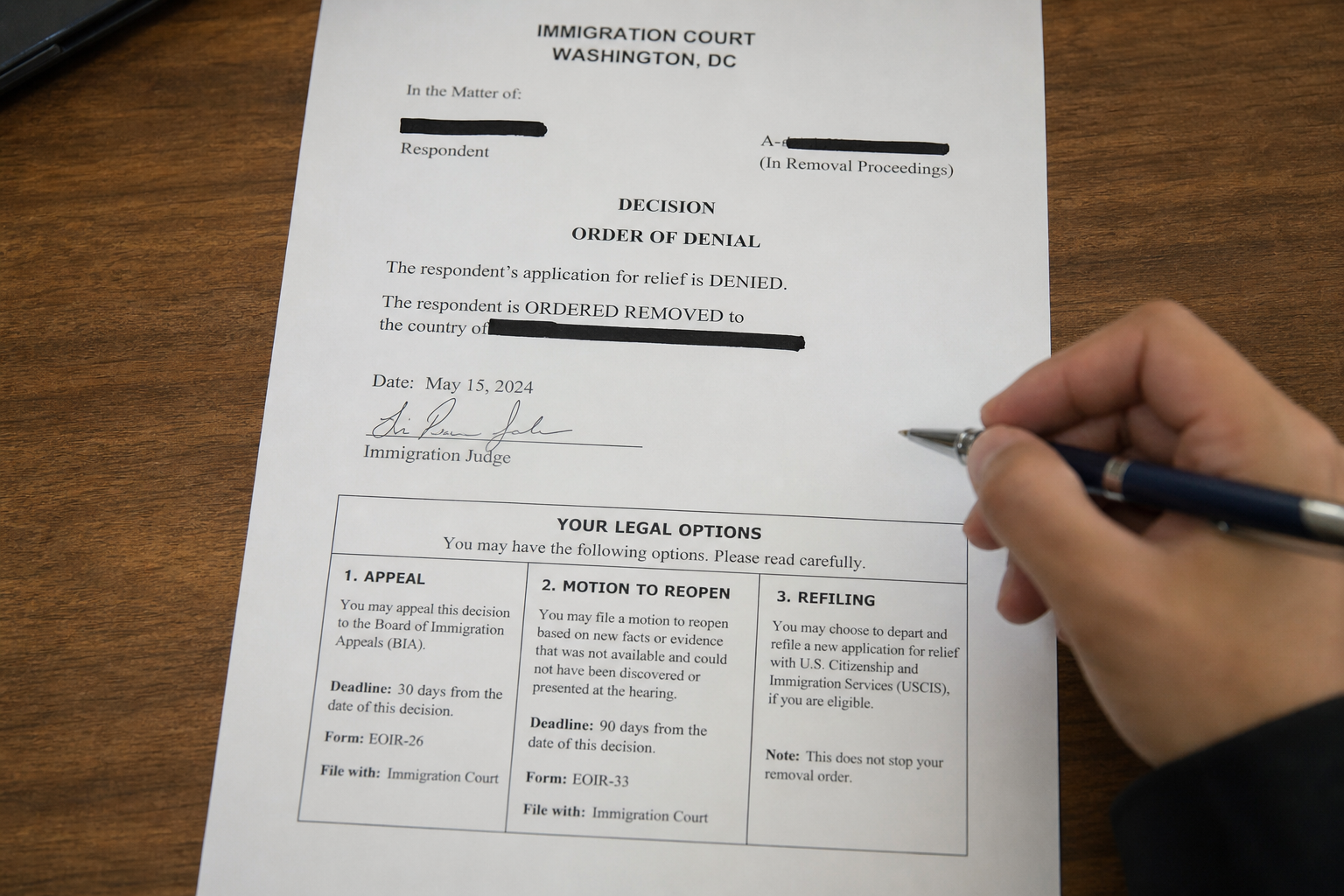
In most cases, you have two main options after an immigration denial:
- A motion to reopen (or reconsider)
- An appeal (to the BIA or within USCIS)
- Refiling
Understanding the difference between these options—and choosing the right one—can determine whether you ultimately win or lose your case.
What Happens After an Immigration Denial?
First, let’s be clear: immigration law is extremely procedural. Deadlines are strict. Requirements are technical. And mistakes are often irreversible.
After a denial, you typically have very limited time to act:
- USCIS motions/appeals: often 30 days
- Immigration Court appeals: typically 30 days to file a Notice of Appeal
If you miss the deadline, your case may be permanently closed.
That’s why understanding your options immediately is critical.
Motion to Reopen vs. Appeal: What’s the Difference?
At a basic level:
Motion to Reopen
You are asking the same officer or judge who denied your case to review it again.
Appeal
You are asking a higher authority to review the denial.
- USCIS appeal → Administrative Appeals Office (AAO)
- Immigration Court appeal → Board of Immigration Appeals (BIA)
This difference is not just technical—it is strategic.
Why the Choice Matters
Many people assume:
“I’ll just file a motion to reopen first, and if that fails, I’ll appeal.”
This is a dangerous assumption, especially in immigration court.
Here’s why:
👉 In Immigration Court, filing a motion to reopen does NOT stop the appeal deadline.
That means:
- You can file a motion to reopen
- The 30-day appeal deadline keeps running
- If the motion is denied after the deadline passes—you lose your right to appeal, and the order of removal against you becomes FINAL!
This is one of the most common and costly mistakes I see.
Motion to Reopen in Immigration Court: How It Works
A motion to reopen asks the same Immigration Judge to reconsider your case based on new facts or evidence.
Key Requirements:
- New Evidence
- Must be material
- Must not have been available at the time of the hearing
- Application for Relief
- You must include a complete draft of the application
- For example: asylum application, cancellation of removal, etc.
- Filing Fee
- Required (unless you qualify for a fee waiver)
- Legal Argument (Recommended)
- While not always required, a strong legal explanation is critical. These days it is expected that you present wining legal arguments in both USCIS and EOIR jurisdictions.
Important Reality
You are asking the same judge who already denied you to change their mind.
That’s not easy.
Judges do not typically reverse themselves unless:
- There is strong new evidence
- There was a clear legal or factual mistake
Motion to Reopen with USCIS
A USCIS motion to reopen is somewhat different.
Requirements:
- Filing Fee
- New Evidence
- Legal Brief (Strongly Recommended)
Unlike court, you usually do not need to attach a full application again, but you must:
- Clearly explain what changed
- Show why the denial was incorrect
There are two types:
- Motion to Reopen → based on new facts
- Motion to Reconsider → based on legal error
USCIS Appeal: When to Use It
A USCIS appeal is filed with a higher authority (usually the AAO).
This is often better when:
- The officer misapplied the law
- The denial is legally incorrect
- There is no strong new evidence, but strong legal arguments
- You can appeal! (Not every denial can be legally appealed. For example, there is no appeal for the denial of I 485, I 539 forms)
BIA Appeal: Immigration Court Appeals Explained
If your case was denied in Immigration Court, your appeal goes to the Board of Immigration Appeals (BIA).
The Appeal Process Has Two Steps:
Step 1: Notice of Appeal
- Must be filed within 30 days
- This preserves your right to appeal
Step 2: Brief
- Detailed legal arguments
- Explains why the judge made an error
- Note that only at this stage, the BIA will be ordering a complete transcript of the proceedings and be sharing it with you and the government. That’s why it can be challenging for not your original attorney to present winning arguments on appeal because a new lawyer has to guess what the issues were.
Why This Matters
Unlike motions, appeals give you:
- A new decision-maker
- A fresh legal review
This is often a major advantage.
Motion to Reopen vs. Appeal: Strategic Comparison
| Factor | Motion to Reopen | Appeal |
| Decision Maker | Same judge/officer | Higher authority |
| Focus | New evidence | Legal errors |
| Risk | High (same decision-maker) | Lower (independent review) |
| Timing | One-step filing | Two-step process (court) |
| Deadline Impact | Does NOT stop appeal deadline (court) | Must be filed on time |
The Biggest Mistake: Filing the Wrong Option
Let’s be direct.
One of the biggest mistakes people make after an immigration denial is choosing the wrong path.
Examples I see frequently:
- Filing a motion when an appeal was needed
- Missing the appeal deadline while waiting on a motion
- Submitting weak or incomplete evidence
- Filing without legal arguments
These mistakes can permanently damage your case.
Practical Advice After an Immigration Denial
If you just received a denial, here’s what you should do immediately:
- Do NOT Panic — But Do NOT Wait
You have limited time. Every day matters.
- Understand WHY You Were Denied
Was it:
- Lack of evidence?
- Legal error?
- Credibility issue?
- Missed requirement?
Your next step depends on this.
- Evaluate Your Options Carefully
Ask:
- Do I have new evidence? → Motion to reopen
- Was the decision legally wrong? → Appeal
- Do I need both strategies?
- Can I just refile my case? (Indeed, it is a viable option, at times)
- Do NOT Assume You Can Fix It Later
Especially in immigration court:
- Filing a motion does NOT protect your appeal rights
- Prepare a Strong Filing
For motions:
- Include new, compelling evidence
- Provide a clear legal explanation
For appeals:
- Focus on legal errors
- Structure a persuasive brief
- Avoid DIY Filings in Complex Cases
Immigration law is not forgiving.
A weak filing can:
- Lock in a denial
- Limit future options
- Harm credibility
Why Hiring the Right Immigration Lawyer Matters
Not all immigration lawyers handle appeals and motions effectively.
These are highly technical areas that require:
- Deep knowledge of immigration law
- Strategic judgment
- Strong legal writing skills
As a New York Immigration Lawyer, I focus on:
- Identifying the strongest legal strategy
- Avoiding procedural mistakes
- Building persuasive arguments
- Presenting evidence effectively
Because the truth is:
👉 Winning an appeal or motion is not just about filing—it’s about how you file.
Real-World Strategy Insight
In some cases, the best approach is:
- Filing a protective appeal
- While also preparing a motion to reopen
This preserves your rights while maximizing your chances.
But this must be done carefully.
Final Thoughts: You Still Have a Chance
An immigration denial is devastating—but it is not always final.
You may still have powerful legal tools:
- Motion to reopen
- USCIS appeal
- BIA appeal
- Federal Lawsuit!
The key is choosing the right one—and doing it correctly.
Need Help With Your Case?
If your case has been denied, do not wait.
The earlier you act, the more options you have.
📞 Call: 917-885-2261
🌐 Visit: www.shautsova.com
You deserve a strategy that gives you the best chance to win—not guesswork.
Because when it comes to appeals, motions, and immigration denials…
👉 What you do next matters more than what already happened.


