
Asylum in the United States: Harder Than Ever— Recent BIA Decision
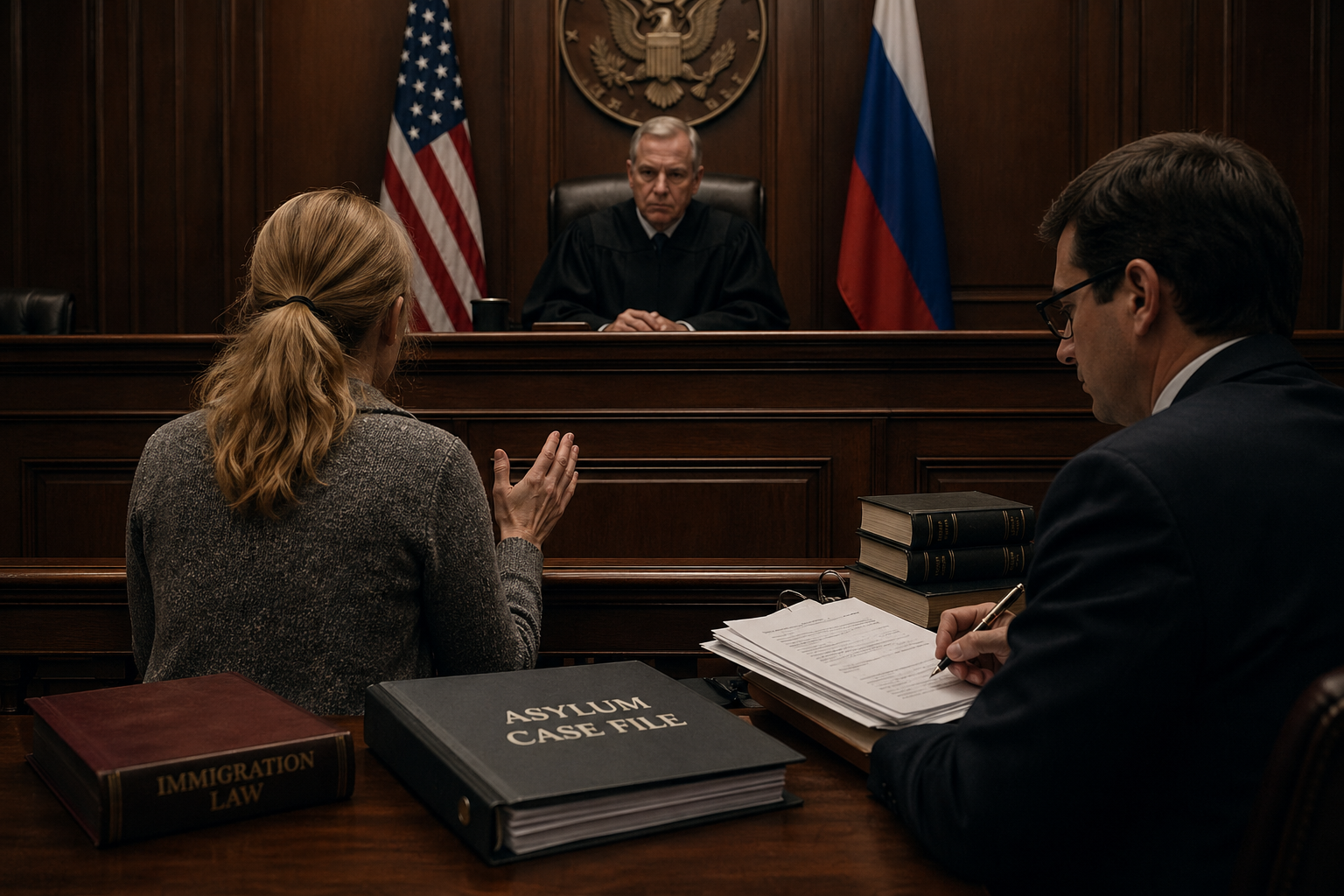 Asylum in the United States: Harder Than Ever— Recent BIA Decision
Author: New York Immigration Lawyer Alena Shautsova
The pursuit of asylum in the United States has never been a simple endeavor. Today, however, it resembles less a straightforward legal pathway and more an intricate labyrinth—layered, scrutinized, and often unforgiving. Yet despite the heightened rigor, success remains attainable. The decisive factor is no longer mere eligibility; it is the caliber of preparation, the precision of legal strategy, and the sophistication of advocacy guiding the case.
Many applicants approach asylum with a dangerous misconception—that a compelling personal story alone will suffice. That era has passed. Modern adjudication demands something far more exacting: a meticulously engineered case, fortified by evidence, consistency, and legal foresight.
The Evolving Landscape: Why Asylum Has Become More Difficult
Over recent years, asylum adjudication has undergone a quiet but profound transformation. Immigration Judges and appellate bodies have adopted a more exacting lens, dissecting claims with forensic attention. Minor discrepancies—once overlooked as human imperfection—now carry disproportionate weight.
This shift is not arbitrary. It reflects a broader institutional emphasis on evidentiary rigor and credibility assessment. Applicants are no longer evaluated solely on the plausibility of their fear but on the internal harmony of their narrative, the corroborative strength of their documentation, and the logical coherence of every assertion.
A single inconsistency—perhaps a date that does not align, or a detail that appears implausible—can unravel an otherwise legitimate claim. Like a fragile tapestry, one loose thread may compromise the entire structure.
Preparation: The Defining Line Between Approval and Denial
In this demanding climate, preparation is not a formality; it is the foundation. An asylum case must be constructed with the same diligence as complex litigation. Every document, every statement, every supporting piece of evidence must interlock seamlessly.
Think of the case as an architectural blueprint. Without structural integrity, even the most compelling design collapses under scrutiny.
Preparation encompasses far more than drafting a declaration. It involves:
- Corroborating evidence that substantiates the applicant’s account—country reports, expert opinions, affidavits, and documentary proof.
- Consistency analysis to ensure that every prior statement—whether in visa applications, border interviews, or written submissions—aligns without contradiction.
- Legal framing that ties the applicant’s experience to recognized grounds of persecution under U.S. asylum law.
This level of preparation is not accidental; it requires deliberate, experienced guidance.
Choosing the Right Lawyer: Beyond Immigration Knowledge
In today’s environment, selecting a lawyer based solely on immigration experience is a critical misstep. The modern asylum case demands a practitioner who operates with the precision of a trial attorney.
Why? Because asylum proceedings are, in essence, litigation.
A truly effective advocate must possess:
- Mastery of the rules of evidence—knowing what can be admitted, how to challenge opposing arguments, and how to build a legally sound record.
- Trial experience—the ability to conduct direct examination, cross-examination, and respond dynamically to judicial inquiry.
- Appellate foresight—anticipating how a case will be reviewed if challenged by the government.
An immigration lawyer without litigation acumen is like a navigator without a compass—capable, perhaps, but ill-equipped for turbulent terrain.
The Critical Role of Appeals: Building a Case That Endures
One of the most overlooked aspects of asylum preparation is the possibility of appeal. Many applicants—and, regrettably, some attorneys—focus exclusively on winning at the Immigration Court level. This narrow perspective can prove fatal.
The government frequently appeals favorable decisions. When that happens, the case ascends to the Board of Immigration Appeals (BIA), where the scrutiny intensifies. At this stage, the outcome hinges not only on the facts but on the legal integrity of the record established earlier.
If the case was not constructed with appellate review in mind, weaknesses become magnified. Missing evidence, unaddressed inconsistencies, or vague judicial findings can lead to reversal.
In other words, success at trial is not the finish line—it is merely the first gate.
Matter of E-N-N-: A Stark Reminder of Heightened Standards
A recent BIA decision, Matter of E-N-N-, underscores the uncompromising direction of asylum jurisprudence.
In this case, the Board identified two critical errors made by the Immigration Judge:
- Failure to Address Inconsistencies and Implausibilities
The Immigration Judge concluded that the respondent was credible but neglected to reconcile evident discrepancies within the record. The BIA found this approach fundamentally flawed. Credibility determinations must be reasoned, not conclusory. Every inconsistency demands examination; every implausibility requires explanation. - Unsupported Finding of a Pattern or Practice of Persecution
The Judge asserted that Anglophones in Cameroon faced systemic persecution. However, this conclusion lacked evidentiary support. Notably, the respondent’s own family members remained unharmed in the country—a fact the Judge failed to meaningfully distinguish.
The BIA’s message is unmistakable: assumptions and generalizations are insufficient. Findings must be anchored in concrete evidence and analytical rigor.
This decision serves as both a cautionary tale and a blueprint. It reveals how easily a favorable ruling can unravel when the underlying reasoning is deficient.
Credibility: The Cornerstone of Every Asylum Claim
At the heart of every asylum case lies credibility. It is the axis upon which the entire claim rotates.
Yet credibility is not merely about honesty. It is about coherence, plausibility, and consistency across time and context.
An applicant may be entirely truthful, yet still appear unreliable if their narrative lacks clarity or contains unresolved contradictions. This is where skilled legal guidance becomes indispensable.
A seasoned attorney will:
- Identify potential inconsistencies before they surface in court.
- Clarify ambiguities within the applicant’s story.
- Prepare the applicant for rigorous questioning, ensuring composure and precision under pressure.
Without this preparation, even the most genuine claim can falter.
Evidence: From Supporting Role to Central Pillar
Evidence in asylum cases has evolved from supplementary material to a decisive element. While testimony remains vital, it is no longer sufficient on its own.
Adjudicators increasingly expect:
- Country condition reports that align with the applicant’s claims.
- Expert testimony providing contextual depth.
- Documentary proof—medical records, police reports, membership evidence, or media coverage.
The absence of corroboration, when reasonably available, can lead to denial—even if the applicant’s testimony is otherwise credible.
Evidence is no longer a supporting actor; it is a co-protagonist.
Strategy Over Hope: The Modern Approach to Asylum
Hope is not a strategy. In the current asylum landscape, success belongs to those who approach their case with deliberate, calculated precision.
This means:
- Treating the case as litigation from the outset.
- Anticipating challenges rather than reacting to them.
- Building a record that withstands not only initial review but appellate scrutiny.
A well-prepared case does not merely tell a story—it constructs an argument, fortified by law and evidence.
The Path Forward: Difficult, But Not Impossible
Yes, asylum in the United States has become more arduous. The margin for error has narrowed, and the expectations have risen. But difficulty does not equate to impossibility.
With exceptional preparation, strategic legal guidance, and a lawyer who understands both immigration law and courtroom dynamics, success remains firmly within reach.
The key lies in recognizing that asylum is no longer a passive process. It demands active, sophisticated advocacy.
Final Thoughts
In an era where scrutiny is relentless and standards are exacting, the difference between approval and denial often hinges on details invisible to the untrained eye. Choosing the right legal representation is not merely important—it is decisive.
Your future in the United States deserves more than guesswork—it demands precision, strategy, and experience. If you are serious about winning your asylum case, do not leave your future to chance.
Call Alena Shautsova, New York Immigration Lawyer, today at 917-885-2261 and secure the legal representation your case requires.


