
Asylum Lawyer in New York – Complete Guide to Winning Your Case (2026)
Asylum Lawyer in New York – Complete Guide to Winning Your Case (2026)
Author: Asylum Lawyer USA Alena Shautsova
If you are afraid to return to your home country, you may qualify for asylum in the United States. But asylum is not automatic. It is one of the most complex areas of immigration law — and mistakes can permanently damage your future.
As a New York immigration lawyer, I have seen strong asylum cases approved — and I have seen avoidable mistakes lead to denial and even deportation.
This guide will explain: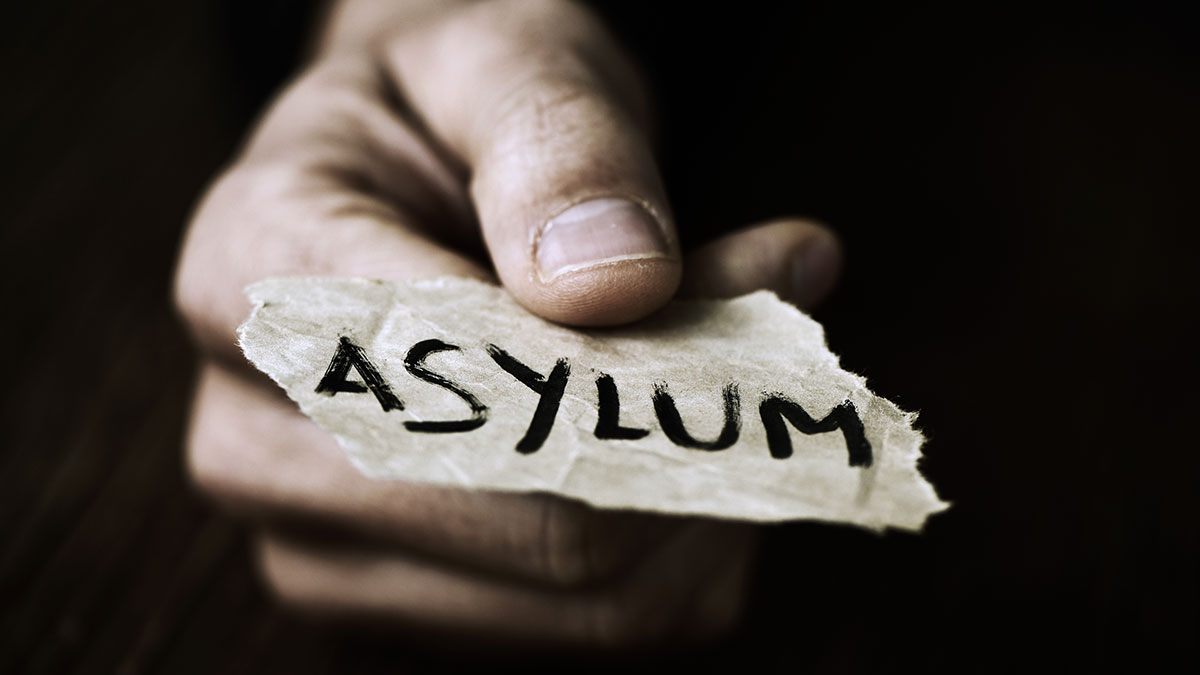
- Who qualifies for asylum
- The one-year filing deadline
- What evidence wins cases
- What happens at the asylum interview
- What to expect in Immigration Court
- How to move from asylum to a green card
If you are looking for the best immigration lawyer in New York to help you build a strong asylum case, this guide will help you understand what really matters.
What Is Asylum Under U.S. Law?
Asylum is protection granted to individuals who meet the definition of a refugee under:
INA § 208 (8 U.S.C. § 1158)
You must prove that you:
- Are unable or unwilling to return to your country
- Have suffered past persecution OR fear future persecution
- The persecution is based on:
- Political opinion
- Religion
- Nationality
- Race
- Membership in a particular social group
Not every difficult situation qualifies. Economic problems, general war conditions, or fear of crime are usually not enough unless they are connected to one of the protected grounds.
This is where strategy matters. Resistance to corruption in one’s country may constitute political opinion sufficient to win one’s case. So can be non-desire to participate in internationally recognized crimes that are being committed by a military of one’s country.
Membership in a particular social group is a ground for asylum that is constantly re-shaped by the courts. While one’s own family may be sufficient to satisfy this criteria, often, another, important characteristic other than familiar relationship must be shown to win one’s case. One of the most important tasks a lawyer is performing when consulting a client, is to identify one’s potential ground for asylum based on the facts a client presents. Here is where experienced and legal knowledge are irreplaceable.
Recent Decisions from the BIA to Know
The Board of Immigration Appeals is shaping and re-shaping the US asylum law. Within the past 6-8 months the BIA issued a number of decisions that affect or will affect each asylum case. One must know about them to make sure to address possible issues per these decisions ahead of time. Here they are:
G-M-I-, 29 I&N Dec. 431 (BIA 2026)
The relevance and the reliability of an expert witness’ opinions are significantly undercut when those opinions are informed by anecdotal or inaccurate facts or data.
E-A-S-O-, 29 I&N Dec. 422 (BIA 2026)
The Matter of N-A-M-, 24 I&N Dec. 336 (BIA 2007), framework is the proper rubric for determining whether a crime is particularly serious and there is no presumption that a single misdemeanor conviction is not for a particularly serious crime. Matter of Juarez, 19 I&N Dec. 664 (BIA 1988), overruled.
S-M-H-, 29 I&N Dec. 412 (BIA 2026)
The written warnings on the respondent’s initial asylum application provided the respondent with statutorily compliant notice of the consequences of filing a frivolous application, irrespective of the absence of oral warnings by an Immigration Judge. Matter of X-M-C-, 25 I&N Dec. 322 (BIA 2010), clarified.
D-G-B-L-, 29 I&N Dec. 392 (BIA 2026)
The serious nonpolitical crime bar to asylum and withholding of removal does not include a duress exception.
E-M-F-S-, 29 I&N Dec. 379 (BIA 2026)
Death threats alone rarely rise to the level of persecution and only do so if they are objectively credible and issued by a person or persons with the immediate ability to carry them out.
L-T-A-, 29 I&N Dec. 362 (BIA 2025)
Evidence that a respondent had a legal right to enter, live, work, and own property indefinitely in the country of proposed resettlement demonstrates that the respondent was offered “some other type of permanent resettlement” for purposes of the firm resettlement bar.
N-P-A-, 29 I&N Dec. 347 (BIA 2025)
The respondent did not establish a well-founded fear of persecution based on a pretextual summons for his political activity and country conditions evidence that political activists are detained and severely harmed where a similar summons did not result in harm to the respondent’s son and the respondent lived for years in Moldova without harm.
K-S-H-, 29 I&N Dec. 307 (BIA 2025)
A single attempt to report an incident of harm by private actors to local police, without further harm from the police themselves or evidence of their widespread collusion with the alleged persecutors, does not establish that the government, as a whole, is unable or unwilling to protect a respondent from persecution.
C-I-G-M- & L-V-S-G-, 29 I&N Dec. 291 (BIA 2025)
(1) If the Department of Homeland Security claims that an asylum cooperative agreement bars a respondent from applying for asylum in the United States, the Immigration Judge should determine whether the safe third country bar applies prior to and separate from considering a respondent’s eligibility for asylum.
(2) A respondent subject to the terms of an asylum cooperative agreement has the burden to establish by a preponderance of the evidence that he or she will more likely than not be persecuted on account of a protected ground or tortured in the relevant third country to avoid application of the safe third country bar and for the respondent to be eligible to seek asylum and other protection claims in the United States.
Who Qualifies for Asylum in 2026?
You may qualify if you were:
- Arrested or threatened because of political views
- Targeted for anti-government activity
- Persecuted for religious beliefs
- Attacked because of LGBTQ identity
- Targeted due to activism, journalism, or public speech
- Threatened by authorities you reported to
- Subjected to domestic violence where your government failed to protect you
- Targeted because of ethnicity or nationality
For example, many Russian nationals have applied for asylum based on political opposition, anti-war activity, journalism, or social media activism. Each case must be supported with credible evidence and a detailed declaration.
If you are unsure whether your situation qualifies, a USA immigration lawyer must analyze your case carefully before filing.
The One-Year Filing Deadline (Critical)
Under INA § 208(a)(2)(B), you must apply for asylum within one year of entering the United States.
If you miss this deadline, your case can be denied unless you prove:
- Changed circumstances (country conditions changed, new threats)
- Extraordinary circumstances (serious illness, legal disability, ineffective counsel)
Many people lose strong cases because they file too late.
If you entered more than one year ago, do not assume you are ineligible. There may be exceptions — but you must act quickly.
Affirmative vs Defensive Asylum
There are two ways to apply:
1️⃣ Affirmative Asylum
You are not in removal proceedings.
You file Form I-589 with USCIS.
You attend an asylum interview at the Asylum Office.
2️⃣ Defensive Asylum
You are in Immigration Court.
You present your case before an Immigration Judge.
New York has one of the busiest Immigration Courts in the country. Preparation is essential.
A strong case requires:
- Detailed affidavit
- Country conditions evidence
- Corroborating documentation
- Legal argument tying facts to statute
What Evidence Wins Asylum Cases?
USCIS and Immigration Judges look for:
✔ Detailed personal declaration
✔ Consistency in testimony
✔ Country condition reports
✔ Police records or complaints
✔ Medical records
✔ Witness affidavits
✔ News articles
✔ Social media proof
✔ Political membership evidence
Under the REAL ID Act, credibility is critical. Even small inconsistencies can damage your case.
This is why you should never copy templates from the internet. Every asylum declaration must be personalized and legally structured.
The Asylum Interview: What to Expect
If you apply affirmatively, you will attend an interview at the Asylum Office.
The officer will:
- Ask detailed questions about your past
- Test your credibility
- Compare your answers to your written declaration
- Examine country conditions
Common mistakes include:
- Giving short or vague answers
- Forgetting dates
- Contradicting prior statements
- Bringing incomplete documentation
You must prepare thoroughly before the interview.
What you will not be allowed to do at your Asylum interview: you will not be allowed to take notes of your answers, you will not be allowed to refer to documents and tables, charts you prepared; your lawyer will not be able to answer the questions for you. You will need to provide your own interpreter for the asylum interview!
What Happens If Your Case Goes to Immigration Court?
If USCIS does not grant asylum, your case may be referred to Immigration Court.
In court, you will have:
- A Master Calendar Hearing (short procedural hearing)
- An Individual Hearing (full trial)
At the Individual Hearing:
- You testify under oath
- The government attorney may cross-examine you
- The judge evaluates credibility and legal eligibility
Immigration Judges in New York expect organized legal arguments — not just emotional stories.
A structured legal presentation significantly increases your chances.
Common Reasons Asylum Cases Are Denied
Understanding denial patterns helps you avoid them.
- Missed one-year deadline
- Inconsistent testimony
- Weak nexus to protected ground
- Insufficient evidence
- Failure to prove government inability to protect
- Criminal record complications
- Travel back to home country
Preparation prevents most of these problems. At times, an asylum officer will state that you are barred from asylum due to an aggravated felony, particular serious non-political crime, terrorism related bar such as when you are accused of providing material support to terrorist organizations. In addition, recently, you may be barred from asylum if there is a safe third country that will accept you instead of your home country. Asylum Cooperative Agreements with Honduras, Uganda, Guatemala are used by the USA government to disqualify one from asylum if certain criteria are met. As an asylum seeker, you will have to be prepared for this challenge ahead of time.
Asylum Work Permit Rules
You may apply for a work permit (EAD) 150 days after filing asylum, if no delays were caused by you.
The 180-day asylum clock rule still applies.
Delays such as:
- Requesting adjournments
- Failing to attend biometrics
- Failing to bring your own interpreter to the interview
- Amending your application improperly
…can stop the clock.
You must track timing carefully.
From Asylum to Green Card
If asylum is granted:
After 1 year, you may apply for permanent residence under INA § 209(b).
Requirements include:
- Continued eligibility
- Physical presence in the U.S.
- No serious criminal issues
After 5 years as a permanent resident, you may apply for citizenship.
Asylum can become a full path to U.S. citizenship — but only if handled correctly from the beginning.
Special Considerations for Russian Nationals
Many Russian-speaking applicants face issues involving:
- Political activism
- Anti-war protests
- Social media opposition
- Risk of criminal prosecution
- Mobilization fears
Country condition documentation must be current and specific. General claims are not enough.
Your case must show individualized risk.
Why Hiring a New York Immigration Lawyer Matters
Asylum law changes frequently. Federal court decisions affect how “particular social group” is defined. Credibility standards continue to evolve.
When you hire a New York immigration lawyer, you are not just hiring someone to file forms.
You are building:
- A legal strategy
- A detailed narrative
- A structured evidentiary file
- A courtroom presentation plan
The difference between approval and denial often comes down to preparation.
If you are searching for the best immigration lawyer in NYC, look for:
- Experience in Immigration Court
- Strong writing skills
- Knowledge of federal asylum precedent
- Clear communication
- Strategic planning, not shortcuts
Frequently Asked Questions
Can I apply for asylum if I overstayed my visa?
Yes. Overstaying does not prevent asylum eligibility.
Can I apply if I entered without inspection?
Yes. You may still qualify.
Can I include my spouse and children?
Yes. Certain family members can be included.
Can I travel after filing?
Travel without Advance Parole may be considered abandonment. Travel back to your home country can seriously damage your case.
How long does asylum take in New York?
Processing times vary. Immigration Court cases can take several years.
What You Should Do Now
If you fear returning to your country:
- Do not delay filing.
- Gather evidence immediately.
- Avoid inconsistent statements.
- Do not rely on online templates.
- Speak with an experienced USA immigration lawyer.
Your asylum case is not just paperwork. It is your future.
Speak With an Experienced Asylum Lawyer in New York
If you are ready to take the next step, you can contact my office directly.
📞 917-885-2261
🌐 www.shautsova.com
When your safety, status, and future are at stake, you need preparation, strategy, and strong legal representation.
If you are looking for a New York immigration lawyer to guide you through asylum, removal defense, or complex immigration matters, take action now.
The earlier you begin, the stronger your case can be.


