
Immigration Enforcement in the U.S.: From Trump to Today, and What New Yorkers Need to Know
Immigration Enforcement in the U.S.: From Trump to Today, and What New Yorkers Need to Know
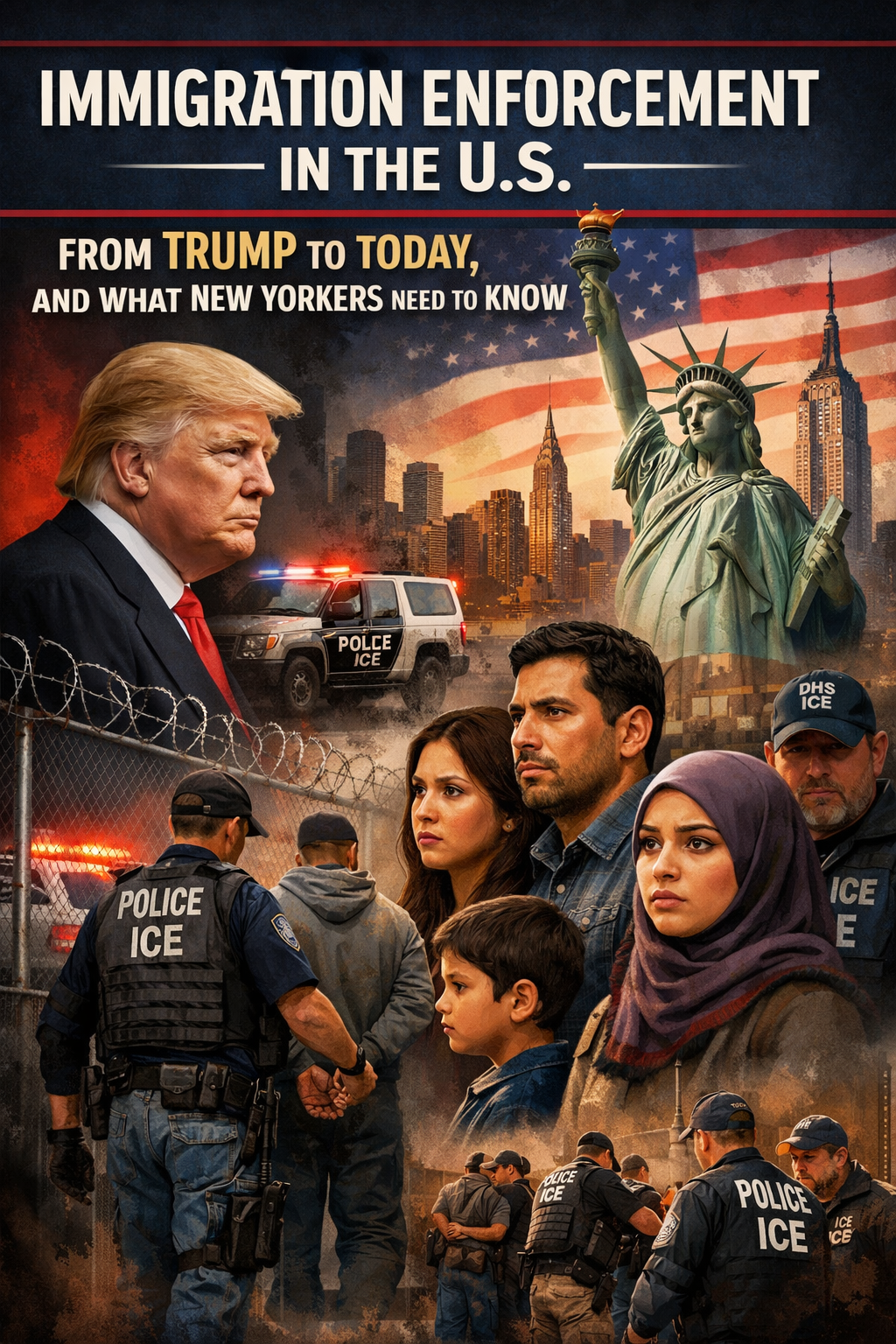
By Alena Shautsova, New York Immigration Lawyer
📞 Contact: 917-885-2261
Immigration enforcement in the United States has been a flashpoint of legal conflict and public debate — especially here in New York City, one of the largest immigrant hubs in the nation. Recently, New York City Mayor Zohran Mamdani signed a high-profile executive order aimed at strengthening sanctuary city protections and limiting certain federal immigration enforcement activities on city property. Understanding what this order means — and what it doesn’t do — requires stepping back to see how federal immigration enforcement has evolved in recent years.
A Short History: ICE Enforcement Since President Trump Took Office
ICE — U.S. Immigration and Customs Enforcement — plays a central role in enforcing immigration laws nationwide. Its mandate includes detaining and removing noncitizens who are subject to deportation and investigating immigration violations. But how ICE operates and prioritizes enforcement has shifted significantly over time.
Trump Era Immigration Enforcement (2017–2020)
When President Donald Trump took office in January 2017, immigration enforcement became a central priority of the federal government:
- Broad enforcement directives were issued directing ICE to pursue removal of all deportable noncitizens, with less emphasis on discretionary priorities such as serious criminal convictions.
- ICE expanded its reach into new contexts, including increased arrests in and around courthouses and other civil settings — moves that sparked legal challenges. In fact, New York partnered with local prosecutors in 2019 to challenge ICE arrests near courthouses as violating longstanding common-law protections, resulting in a court injunction in federal court. (Wikipedia)
Critics of the Trump era policies argued that this broad enforcement generated fear and reduced trust in immigrant communities seeking basic services or engaging with local courts.
ICE Enforcement in 2025–2026
Following the 2024 election and ICE’s continued operations, federal enforcement actions — including a campaign in New York City dubbed Operation Salvo — reflected another intensified period of ICE activity in urban areas. (Wikipedia) These operations have included arrests tied to alleged gang activity and other federal targets. Headlines over the past year have also included national outrage over confrontations and even fatal shootings during federal immigration actions — underscoring why many local leaders and communities are concerned about ICE tactics. (AP News)
Mayor Zohran Mamdani’s Executive Order: What It Says
On February 6, 2026, Mayor Zohran Mamdani signed an executive order aimed at “reinforcing sanctuary city protections” and restricting certain interactions between federal immigration authorities and New York City agencies. (New York City Government)
Here are the key components of the order:
- Prohibition on ICE Entering City Property Without a Judicial Warrant
The order bars ICE agents from entering NYC-owned facilities — including schools, hospitals, shelters, public spaces, and lots — without a warrant issued by a judge. (NY Immigration Coalition)
This means that, on city property, ICE should not set foot without a judge’s authorization, reinforcing privacy and safety for residents accessing these spaces.
- Privacy and Data Protections
The executive order directs city agencies not to share information collected for city purposes with federal immigration authorities, except where required by law. Agencies are also tasked with appointing privacy officers and conducting internal audits to ensure compliance. (NY Immigration Coalition)
- “Know Your Rights” Campaign
At the signing, Mayor Mamdani launched a multilingual push to distribute information on immigrant rights, including advice on remaining silent, requesting an attorney, or insisting on an interpreter if stopped by ICE. (CBS News)
- Interagency Coordination and Audits
The order establishes an interagency committee and directs regular audits of how city agencies interact with federal immigration authorities, intended to boost local accountability. (NY Immigration Coalition)
How the Executive Order Interacts with Federal Law
Federal Supremacy & Enforcement Authority
It’s important to be clear:
- ICE enforcement authority comes from federal law — specifically the Immigration and Nationality Act (INA), which sets who can be detained and removed, and under what circumstances.
- Local governments cannot block ICE from enforcing federal immigration laws outside city property or override federal immigration statutes. The U.S. Constitution’s Supremacy Clause means federal immigration law generally trumps local rules.
In practical terms, the Mayor’s executive order doesn’t stop ICE from arresting or removing people anywhere in New York City if federal law allows it.
Legal Limits on Local Restrictions
New York City’s executive order mostly applies to city property and city agencies’ cooperation with federal immigration authorities — not to ICE’s independent federal enforcement powers. While the order strengthens local sanctuary protections and data privacy practices, it can’t legally prevent ICE from conducting immigration arrests on public streets or federal immigration enforcement outside city-controlled spaces.
This legal dynamic has been echoed in legal analyses of local sanctuary policies nationwide — local governments can limit cooperation, but they cannot unilaterally nullify federal immigration enforcement actions.
Federal authorities — including the Department of Homeland Security — have criticized the executive order, claiming it undermines public safety by making ICE cooperation more difficult. (Department of Homeland Security)
What New Yorkers Should Do If Stopped by ICE
Even with strong local protections, New Yorkers — regardless of immigration status — should know their rights if they encounter ICE agents:
- Stay Calm and Do Not Run
Being confrontational or attempting to flee can escalate a tense situation. Remain calm and be respectful. You have constitutional rights, but your safety comes first.
- Ask If You Are Free to Leave
If an agent is questioning you, you can politely ask, “Am I free to leave?” If the answer is no, that suggests you are being detained, and that’s when the following rights matter.
- You Have the Right to Remain Silent
You do not have to answer questions about your immigration status, where you were born, or your immigration history. You do not have to provide documents or statements beyond identity if you choose not to. (This is protected under the Fifth Amendment.) However, recent aggressive ICE enforcement showed that these rights are routinely overlooked and non-compliance with the ICE orders leads to violence and detention.
- Ask for an Attorney
You have the right to consult with an attorney before answering questions. If you cannot afford one, you can request to be represented by counsel in immigration proceedings.
- Do Not Sign Any Papers Without Consulting a Lawyer
ICE may try to get you to sign voluntary departure forms or withdrawal of applications. Do not sign anything without speaking to a lawyer. You might be giving up future legal options.
- Language Access Rights
If you don’t speak English well, ask for an interpreter. ICE is required to provide language assistance if needed.
Final Thoughts: Protections and Preparedness
New York City’s executive order is designed to reaffirm sanctuary protections, strengthen privacy safeguards, and limit certain federal enforcement access to city properties. (New York City Government) It’s an important policy statement and can help inform local practices and training — but it does not override federal law or ICE’s authority to enforce federal immigration statutes.
That’s why education and preparedness matter for all New Yorkers. Know your rights, carry a “Know Your Rights” card if you’re concerned, and have a legal plan in place before any encounter with federal immigration agents.
If you or someone you know needs help navigating ICE enforcement issues, call me at 917-885-2261 — I will stand with you to protect your rights and dignity under U.S. immigration law.


