
New Appeal Rules For Immigration Court Cases 2026
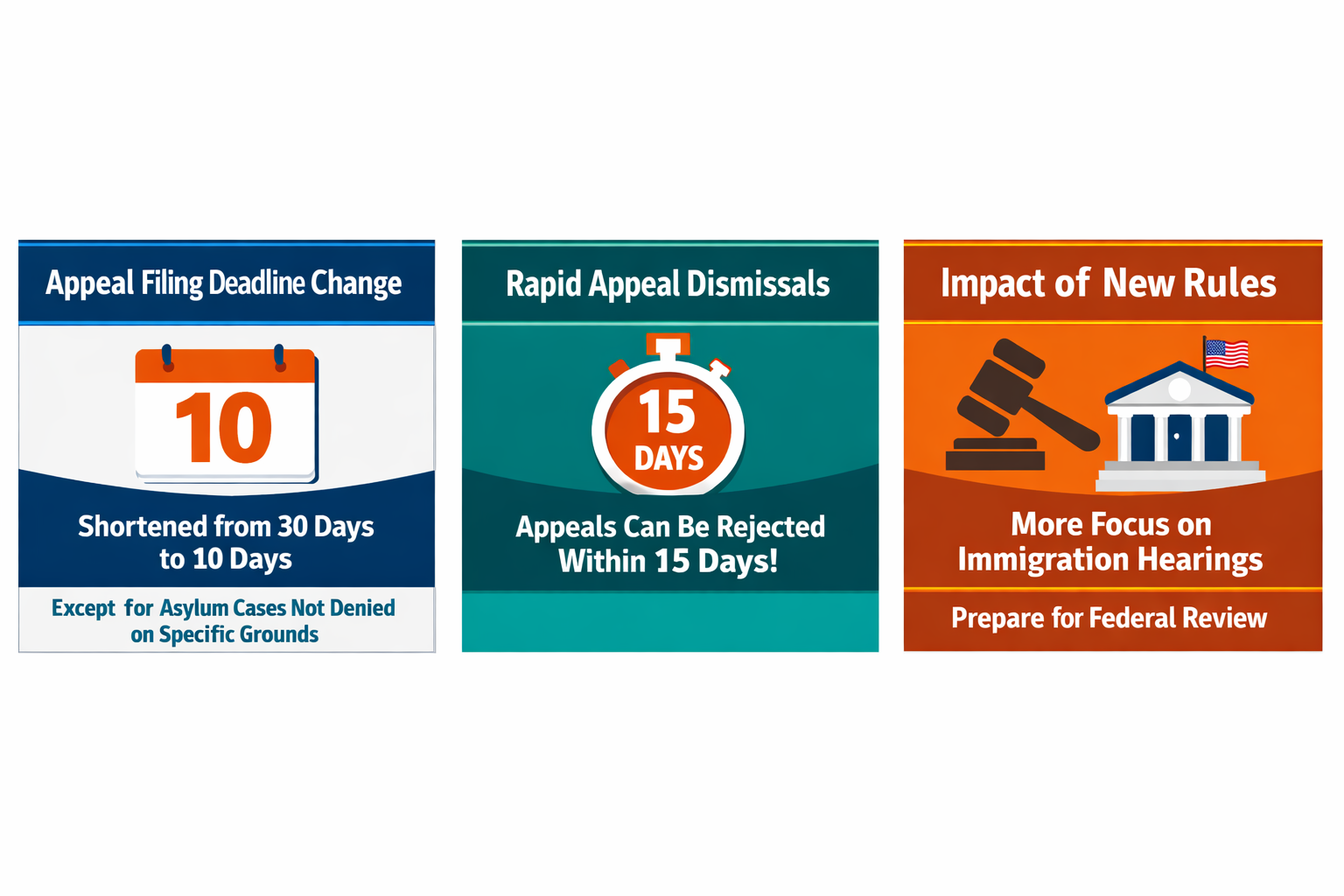
In 2026, the Board of Immigration Appeals (BIA) is introducing major procedural reforms that will fundamentally change how appeals from Immigration Judge decisions are handled. On February 6, 2026, new rules were published in the Federa; Registry with the effective date of 30 days from the publication.
Rather than simply speeding up the existing appeal timeline, the changes redesign the appellate process so that merits review is no longer assumed but must be affirmatively granted by the Board.
In other words, the BIA will act more like the US Supreme Court where en banc panel will decide quickly if a particular case merits the appellate review, or a decision by an Immigration judge should be affirmed. Such a review will take place within 15 days from the date the Notice of Appeal would be filed!
From Automatic Merits Review to Screening Gatekeeping
Under current practice, filing a timely Notice of Appeal automatically places a case on a briefing schedule, and the BIA typically reviews the appeal on its substantive merits. Under the new rules, however, appeals will first go through a rapid screening mechanism. Only appeals that the Board chooses to accept for full merits consideration will proceed to traditional briefing and adjudication. Many appeals may instead be dismissed quickly as part of this initial review phase.
A Significant Reduction in Appeal Deadlines
One of the most dramatic procedural changes is the shortening of the appeal deadline. For most cases, the deadline to file a Notice of Appeal will be reduced to 10 calendar days after the Immigration Judge’s decision is issued or mailed. This compressed timeframe will require respondents and their counsel to act much more quickly than under the traditional 30-day window. It means, for example, if a person was applying for cancellation of removal, review of I 751, immigration waiver, or adjustment of status, and there is a denial, such a person will have 10 days only to file a notice of appeal that now should look more like the ready-brief!
A Limited Exception for Certain Asylum Decisions
There is a narrow statutory exception that preserves the 30-day appeal window for specific asylum rulings. This extended deadline remains in place only when (1) an asylum application was actually decided on the merits by the Immigration Judge, and (2) the denial was not based on statutory bars such as safe-third-country provisions, the one-year filing deadline, or prior asylum denial rules. Because this exception exists in statute, it cannot be shortened by the Board’s regulations and must be honored where applicable.
Implications of the New Ten-Day Rule
The shift to a 10-day filing period profoundly alters appellate strategy:
- Respondents and attorneys will need to identify appeal issues almost immediately following a hearing, often without waiting for full transcripts or records.
- The Notice of Appeal itself will need to do more substantive work, since many appeals may be screened out before the Board issues a briefing schedule.
- Failure to file within the shorter deadline will almost certainly result in dismissal, making strict calendar management essential.
The Asylum Statutory Carve-Out Explained
The statutory carve-out for asylum cases is rooted in federal law governing asylum procedures. When an Immigration Judge adjudicates an asylum application on the merits — meaning the case was not dismissed due to threshold eligibility bars — the appeal timeline remains 30 days. But if asylum is denied based on statutory bars (e.g., safe-third-country agreements or timeliness issues), the appeal reverts to the default 10-day schedule.
Operational Effects on Lawyers and Litigants
For practitioners, the new regime demands a triage mindset: appeal intake must capture deadlines immediately, and drafting must begin without delay. Many issues that in the past were developed in briefs may now need to be surfaced in the Notice of Appeal itself.
For noncitizens, the changes mean that preserving appellate rights will require faster action and more immediate consultation with experienced counsel to evaluate whether an appeal should be filed and what errors are worth raising. The new rule will also flood Federal court with petitions for review, rather than filter the cases at the BIA stage. Pro-se applicants, low income individuals, and people who are waiting for other reliefs will be affected by this new change the most.
Conclusion: A Procedural Rule With Substantive Impact
The 2026 reforms move the BIA appeals process from a traditional appellate model — where merits review is assumed after a timely filing — to a gatekeeper model that emphasizes speed and early issue framing. Especially in asylum cases, knowing when the 30-day period applies versus the new 10-day default will be critical for preserving appeal rights.


