Citizenship
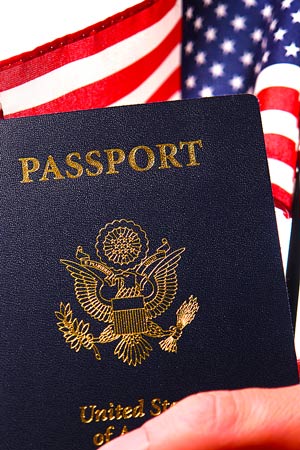
U.S. Citizenship Lawyer in New York: Move Forward With Confidence
You have built your life in America. Now you want the security of U.S. citizenship—and clear answers about how to get there.
Whether you are ready to file your first citizenship application or concerned about an arrest, extended travel, tax issues or your immigration history, careful preparation matters. Before submitting Form N-400, you should understand both your eligibility and any issues that could affect your case.
At the Law Office of Alena Shautsova, we help green card holders pursue U.S. citizenship through naturalization, prepare for citizenship interviews and address complicated eligibility questions. Our New York immigration practice also assists people who may already have acquired citizenship through a U.S. citizen parent.
Find out whether you are ready to apply—and what needs attention before you file. Schedule a paid citizenship consultation or call (917) 885-2261.
How Our Citizenship and Naturalization Lawyer Can Help
A citizenship application involves more than completing a form. USCIS may examine your immigration history, travel, criminal record and the circumstances under which you obtained permanent residence. Our citizenship services include:
- Naturalization eligibility review: Determining when you may apply and whether you meet the requirements for your particular pathway.
- Criminal record analysis: Reviewing arrests, charges, convictions and court dispositions, including matters that were dismissed, sealed or expunged.
- Good moral character assessment: Evaluating potential concerns involving unlawful acts, taxes, child support, statements to government agencies and other relevant conduct.
- Travel and residence review: Analyzing time outside the United States, continuous residence and physical presence.
- Prior immigration filing review: Identifying inconsistencies or concerns involving earlier applications, employment history, marriage records and the basis for your green card.
- Selective Service issues: Assessing registration requirements and the effect of any failure to register.
- English and civics requirements: Evaluating potential exemptions, accommodations or disability exceptions when applicable.
- N-400 preparation and interview support: Preparing the application, organizing supporting documents and helping you understand questions that may arise.
- Citizenship through parents: Assessing whether you already became a citizen and whether Form N-600 or another documentation process is appropriate.
If you have received a request for evidence, a notice questioning your eligibility or a naturalization denial, we can review the decision and discuss available next steps.
Who Qualifies for U.S. Citizenship Through Naturalization?
Most applicants pursue naturalization after five years as a lawful permanent resident. Certain qualifying spouses of U.S. citizens may apply under a three-year rule, provided they satisfy the additional requirements. Special rules may apply to military service members and other eligible applicants.
Depending on your category, requirements generally include:
- Being at least 18 years old when filing.
- Establishing lawful permanent resident status.
- Meeting continuous residence and physical presence requirements.
- Residing in the required state or USCIS district before filing.
- Demonstrating good moral character.
- Meeting English and U.S. history and government requirements, unless an exemption or exception applies.
- Establishing attachment to constitutional principles and taking the Oath of Allegiance, subject to applicable exceptions.
Having a green card for five years does not automatically mean you qualify. Extended absences, certain criminal matters, inaccurate prior filings or other issues may require legal analysis before you submit your application.
Can You Become a U.S. Citizen Through a Parent?
Some people are already U.S. citizens without realizing it. Before applying for naturalization, it may be important to determine whether you acquired citizenship at birth or automatically after birth.
Citizenship at birth: A person born outside the United States may acquire citizenship through a U.S. citizen parent if the applicable legal requirements are met. The analysis depends on the law in effect at birth, the parent’s citizenship and residence or physical presence history, and other relevant circumstances.
Automatic citizenship after birth: Under the Child Citizenship Act provisions effective February 27, 2001, certain foreign-born children automatically acquire citizenship when all requirements are satisfied before age 18. These generally include having a U.S. citizen parent, being a lawful permanent resident and residing in the United States in that parent’s legal and physical custody. Different laws may govern people whose relevant circumstances occurred earlier.
If you already acquired citizenship, the appropriate next step may be obtaining a Certificate of Citizenship or U.S. passport, rather than filing an N-400 naturalization application.
Concerned About Your Citizenship Application? Start With a Legal Review.
An old arrest, a lengthy trip abroad or a mistake in an earlier application does not always mean citizenship is out of reach. It does mean you should understand the legal consequences before filing.
The Law Office of Alena Shautsova offers citizenship and naturalization assistance from New York, with consultations available in English and Russian.
Take the next step toward understanding your citizenship options.
Book Your Citizenship Consultation
Call (917) 885-2261
www.shautsova.com
Citizenship Through Naturalization Updates
In the past year, Immigration field has seen many changes, and one specific area of the Immigration has been affected the most was naturalization: proceedings necessary for a green card holder or permanent resident to become a US citizen.
The law of the United States establishes requirements one has to meet to become a US citizen. Some of them are “hard” requirements, something that a person cannot change which are not subject to interpretation, and “soft” requirements, that are subject to interpretation by the government and the applicant, in some cases. While the “hard” requirements were not changed (and they cannot be changed without the act of Congress), the “soft” requirements underwent massive changes, and the “interpretation” portion of the citizenship qualifications expanded to the point it became more important than the “hard” requirements.
Qualifications for Naturalization, US Citizenship (hard requirements)
To qualify for citizenship in the United States, a person who is a green card holder a US permanent resident has to demonstrate that he/she:
Continuous Residence
Has been a green card holder for 3 (if the green card was based on a marriage to a US citizen) or 5 years in the United States ( this time is calculated from the date “resident since” printed on one’s green card. Please keep in mind that for certain green card holders the date will be “rolled back” and maybe actually earlier than the date the person’s application for a green card was approved. For example, a person who was granted asylum or a refugee status will be considered a permanent resident from the date of the admission for a refugee or one year earlier for an asylee).
Interestingly enough, a conditional permeant resident, who is otherwise met all the requirements for naturalization may file for it as well, but the naturalization will not be granted unless the condition was removed! See Stuck I 751 Petition.
Also, certain members of the US Armed forces are exempted from being green card holders first! See Expedited Citizenship.
In addition, a person can file for naturalization only if he/she establishes that he or she has resided in the state or service district having jurisdiction over the application for three months prior to filing the application. It means that if you moved to a different district within the past 3 months, you will need to wait until you reside in the new district for three months before filing your naturalization application.
What about travels outside the United States before filing for citizenship?
There are two types of travels outside the United States that are automatically presumed to break the continuity of residence for purposes of naturalization.
- Travels outside the US of more than 6 months but less than one year; and
- Travels outside the US of one year or more.
In addition, an officer can check the entire travel history and determine if a person with multiple absences of less than 6 months will be able to satisfy the continuous residence and physical presence requirements. The idea is that a person has to establish that the US is really his/her home, dwelling place! Now, a person who does not want to be found to have abandoned his/her green card status in the United States should file a Re-entry permit prior to leaving the United States. See When To Apply For Re-Entry Permit As A Permanent Resident. Even though this is a “hard” requirement, recently, there are cases of adverse findings of residence for those to travel abroad frequently for prolonged periods of time.
What about working abroad before filing for US citizenship?
In certain situations, a person may preserve his/her continuous residence for naturalization purposes even if he/she has to work abroad for a long time. An application has to be filed for it on form N470. In order to qualify, the following criteria must be met according to the USCIS Practice Manual:
- The applicant must have been physically present in the United States as a green card holder for an uninterrupted period of at least 1 year prior to working abroad.
- The application may be filed either before or after the applicant’s employment begins, but before the applicant has been abroad for a continuous period of one year.
In addition, the applicant must have been:
- Employed with or under contract with the US government or an American institution of research recognized as such by the Attorney General;
- Employed by an American firm or corporation engaged in the development of US foreign trade and commerce, or a subsidiary thereof if more than 50 percent of its stock is owned by an American firm or corporation; or
- Employed by a public international organization of which the United States is a member by a treaty or statute and by which the applicant was not employed until after becoming an LPR.
The person’s dependents such as wife or husband, unmarried dependent sons or daughters will also be afforded the same benefits if they were accompanying and resided abroad with the principal. In fact, the approval notice will list the names of all dependents who were also afforded the benefits.
However, even if approved, N470, does not substitute the requirement of physical presence, that still has to be met, unless the person also qualified for its exemption.
Strangely, according to the USCIS practice manual, N470 approval does not mean that the applicant and his family members will not be found to have abandoned their LPR status: if, for example, a person claimed special tax exemptions as a non-resident, the government may still find him/her to have abandoned the US green card status.
N470 is not a substitute for necessary travel documents. A green cardholder has to obtain a Re-entry permit if he/she is expecting to be outside the US for more than a year.
Please note that an applicant for naturalization has to present documents demonstrating that the United States is in fact his/her common dwelling place: such as copies of mortgage, lease, bank statements, utility bills, tax returns, and any other documents establishing that he/she actually resides in the US.
Physical Presence
A lawful permanent resident has to physically present in the United States for at least half of the time he/she needs to qualify for naturalization. This physical presence requirement has to be met before a person is submitting his/her application, and not on the date of the decision or an interview! Applicants for naturalization under INA 316(a) for example are required to demonstrate physical presence in the United States for at least 30 months (at least 913 days) before filing for naturalization. In certain situations, time spent outside the United States will count towards the time for physical presence. Only applicants who are employed by or under contract with the US government may be exempt from the physical presence requirements. All other applicants who are eligible to preserve their residence remain subject to the physical presence requirement. Again, the qualifying dependents will have the same benefits as the main applicant.
Non-For-Profit Media Employees
The US law also provides exemptions from continuous and physical presence requirements for employees of certain media organizations abroad. To meet this exception, an applicant for naturalization has to be employed by the US incorporated non-for-profit media organization that distributes information significantly promoting US interests abroad, that is so recognized by the Secretary of Homeland Security and
- File the application for naturalization while still employed, or within 6 months of termination of employment;
- Has to have been continuously employed with the organization for at least five years after becoming an LPR;
- Be within the United States at the time of naturalization; and
- Declare a good faith intention to take up residence within the United States immediately upon termination of employment.
Interpreters, Translators, or Security-Related Position (Executives or Managers) Employed By Department of State or by US armed Forces
The law likewise provides exemptions for those who are employed by DOS or US military. In order to count time abroad as continuous residence and physical presence in the United States for purposes of naturalization under the “section 1059(e)” provision, the applicant must meet all of the following requirements during such time abroad.
The applicant must be:
- employed by the Chief of Mission or the US armed forces;
- under contract with the Chief of Mission or the US armed forces; or
- employed by a firm or corporation under contract with the Chief of Mission or the US armed forces;
The applicant must be employed as:
- an interpreter;
- translator; or
- in a security-related position in an executive or managerial capacity; and
The applicant must have spent at least a portion of the time abroad working directly with the Chief of Mission or the US armed forces.
Religious Employees
Those religious employees (nuns, brothers, ministers) who travel outside the US for temporary missions abroad on behalf of a bona fide organization within the United States, also may treat such time abroad as continuous residence and physical presence in the United States for naturalization purposes.
Green cardholders must have been physically present and residing within the United States for an uninterrupted period of at least 1 year in order to use this benefit.
Military Members and Their Family Members
Depending on the type of military envelopment, military members may be exempted or may qualify for modifications of the physical and continuous presence requirements for naturalization (US citizenship):
- One Year of Military Service – INA 328: If a person served for one year and was honorably discharged, and the person does not have to meet the continuous residence and physical presence requirements, if a person is still serving, or was honorably discharged less than 6 months ago. Unfortunately, citizenship granted pursuant to this section may be revoked in accordance with section 1451 of this title if the person is separated from the Armed Forces under other than honorable conditions before the person has served honorably for a period or periods aggregating five years.
- Service during Hostilities – INA 329: Any service during the time the US President by Executive order designated to be time during which US Armed forces were involved in a conflict with foreign hostility, and the person was honorably discharged. Please note that a person under this provision may be afforded citizenship if, at the time of the enlistment or reenlistment, or extension of enlistment, he/she was in the US or its territories including vessels (without regard that such a person was a green card holder first); or if such a person became a green card holder at any time subsequently. If the person has used this provision to naturalize before, he/she cannot use any periods of service to naturalize under this section again.
- Service in WWII Certain Natives of Philippines – Section 405 of IMMACT90; and
- Members who Enlisted under the Lodge Act – Act of June 30, 1950, 64 Stat. 316.
Importantly, family members (spouses, children, and parents) of the military personnel may also file for citizenship faster than general requirements and be afforded modifications or exemptions to the continuous and physical presence recruitments. They are also eligible for various immigration benefits. See Immigration Benefits For Military Members And Their Families. The following groups qualify for citizenship without meeting all the physical and continuous presence requirements:
- Spouse of US Citizen for 3 Years – INA 319(a);
- Spouse of Military Member Serving Abroad – INA 319(e);
- Surviving Spouse of US Citizen (Widow or Widower) – INA 319(d); and
- Surviving Spouse Person Conducting US Intelligence.
- Child of US Government Employee (Abroad) – INA 320;
- Surviving Child of US Citizen – INA 319(d); and
- Surviving Child of Person Conducting US Intelligence.
Qualifications for Naturalization, US Citizenship (soft requirements)
Knowledge of English Language and US History and Government
One of the US citizenship through naturalization requirements is a person’s ability to write, read and understand the English language, as well as know US history and civics (how to the US government works). A person’s language skills will be tested at the interview by the Immigration officer and the test is usually pretty simple. It means that there is no requirement that a person knowns English perfectly. Recently, however, there have been talks about updating the test and making it potentially, a little harder. See the video blog. The good news, that as of the time of writing this article, every applicant for the citizenship, receives a book that helps them to prepare for the test: it has a list of vocabulary that will be tested and questions for Civics.
But what to do, if a person cannot learn English due to a medical condition or trauma? Then, a person, with a medical waiver, may be exempt from both English test and Civic test requirements. See video. Also, USCIS is making it harder to qualify for the medical test exemption. See New Policy Changes For Citizenship English Requirements Waiver. For those who have been living in the US as green card holders for 10 or 15 years: they may qualify for taking the test in their own language even if they do not have medical conditions. See US Citizenship Without English Language Knowledge.
So, this particular requirement may also be waived, depending on the applicant’s medical conditions and age.
Good Moral Character for U.S. Citizenship: Protect Your Eligibility Before Filing N-400
A clean criminal record does not, by itself, establish good moral character for U.S. citizenship. Your financial responsibilities, family support, prior immigration filings, and other conduct may also affect your naturalization application.
At the Law Office of Alena Shautsova, we help applicants identify potential obstacles before filing Form N-400, prepare supporting evidence, and address difficult questions at the citizenship interview. Whether you are applying for the first time or responding to a USCIS concern, a careful legal review can help you make an informed decision about your next step.
What Does “Good Moral Character” Mean for Naturalization?
Good moral character is a legal requirement evaluated under federal immigration statutes, regulations, and applicable decisions. Some conduct triggers a specific bar; other conduct requires an individualized assessment against the standards of the average citizen in the applicant’s community.
USCIS generally reviews the five years before filing, or three years for qualifying applicants applying through marriage to a U.S. citizen. The requirement continues through the Oath of Allegiance. USCIS may also consider older conduct when it is relevant to your present character or whether you have demonstrated reform.
For background on the legal framework, read Legally Speaking: Good Moral Character Under Federal Immigration Law.
November 4, 2026 USCIS Memo: Support Obligations, Public Benefits, and Citizenship
USCIS issued Policy Memorandum PM-602-0201 on November 4, 2026, addressing good moral character concerns involving:
- Willful failure to support dependents.
- Fraud or deception involving public benefits.
- Failure to meet support obligations under Forms I-864, I-864EZ, or I-864A.
- Failure to honor financial support commitments under Forms I-134 or I-134A.
- Means-tested benefit use connected to intentional avoidance of self-sufficiency.
Signing Form I-134A does not automatically disqualify you from citizenship. The memo distinguishes these commitments from statutory I-864 obligations, but says willful failure to provide promised support can weigh against good moral character.
Lawful receipt of public benefits is not, by itself, a citizenship bar. The memo requires an individualized assessment tied to specific conduct, rather than poverty, disability, or lawful benefit receipt. A sponsored person’s receipt of benefits also does not automatically establish that the sponsor breached an obligation.
The implementation section calls for additional Policy Manual guidance and revisions to Form N-400, with expanded questioning following publication of that guidance. Applicants should review their records without assuming the memo itself immediately changed the application form.
Issues to Review Before Applying for Citizenship
Your attorney should understand the facts behind any potential concern, including:
- Arrests and criminal cases: Obtain actual court records, including dispositions for dismissed, sealed, or expunged matters, and answer the application’s disclosure questions carefully.
- Taxes: Review required returns, outstanding balances, payment agreements, and whether your tax information accurately reflects your circumstances.
- Family support: Gather support orders, payment histories, and evidence explaining any interruption in payments.
- Sponsorship history: Locate copies of financial support forms you signed and records documenting the assistance you provided.
- Prior immigration applications: Identify inconsistencies before they become interview questions.
Our recent guide, Before You File N-400: Three Things to Check Before Applying for U.S. Citizenship, explains how to review your travel, legal and tax history, and previous immigration filings before applying.
Marijuana-Related Conduct and Other Unlawful Acts
Marijuana-related history deserves a separate immigration review. An applicant should not assume that state legalization, a dismissed charge, or the absence of a conviction resolves the federal immigration consequences. The conduct, applicable law, timing, and available exceptions matter.
Read When A State Marijuana-Related Arrest Or Activity Can Become A Citizenship Problem.
Certain unlawful acts can also undermine good moral character even when they do not fall within another specifically listed bar. Extenuating circumstances may matter under the applicable rule. For additional background, see New Trends In Naturalization Proceedings: Good Moral Character and our unlawful acts video blog.
Do Citizenship Problems Disappear After Five Years?
Waiting five years does not resolve every naturalization obstacle. Certain convictions create permanent good moral character bars, including murder convictions and aggravated felony convictions entered on or after November 29, 1990, subject to applicable legal exceptions. Other conduct may trigger a conditional bar or remain relevant to the assessment of present character.
Failure to register for Selective Service requires a different analysis. It is not automatically a permanent citizenship bar. Eligibility depends on factors including whether registration was required, whether the failure was knowing and willful, and the relevant statutory period. Learn more in Failure To Register For Selective Service And Citizenship.
Build the Evidence Before Your Citizenship Interview
A strong application starts with an accurate history and documents that address the legal requirements. Depending on your circumstances, preparation may include certified court records, tax transcripts, support payment records, sponsorship documents, and evidence explaining past problems and subsequent rehabilitation.
Our article Burden of Proof in Immigration Court and USCIS: Who Must Prove What? explains why relevant, credible evidence matters more than simply submitting a large volume of documents.
If USCIS has already denied your application, obtain a prompt review of the decision and available deadlines. Read Citizenship: Appeal Of Denial for background on challenging a naturalization denial.
Speak With a New York Citizenship Lawyer
Before you file, understand what USCIS may question—and how to document your answers.
The Law Office of Alena Shautsova assists with naturalization eligibility reviews, N-400 preparation, interview representation, and citizenship denials. We serve clients in Brooklyn, Amityville, throughout New York, and across the United States, with consultations available in English and Russian.
Call (917) 885-2261 or schedule a confidential citizenship consultation here.
Immigration Lawyer in Amityville, Long Island
The Law Office of Alena Shautsova helps individuals, families, and employers with U.S. immigration law. We handle family and marriage-based green cards, employment visas, asylum, deportation defense, immigration waivers, appeals, and naturalization.
Amityville Office
159 BroadwayAmityville, NY 11701
Hours: Consultations by appointment. In-person, phone, and video appointments are available.
Areas Served
We serve Nassau and Suffolk counties on Long Island, all five New York City boroughs, and clients nationwide in federal immigration matters, subject to the rules of the particular forum.
Consultation Languages
Consultations are available in English and Russian. If you need an interpreter, let us know when booking.
Immigration Services

Deportation Defense Lawyer in NYC & Long Island | Alena Shautsova

Deportation Defense Lawyer in NYC & Long Island | Alena Shautsova


Green Card Lawyer in NYC & New York | Alena Shautsova

Green Card Lawyer in NYC & New York | Alena Shautsova
Work Visa Lawyer in New York: H-1B, O-1, L-1, TN | Alena Shautsova

Work Visa Lawyer in New York: H-1B, O-1, L-1, TN | Alena Shautsova
Marriage Visa & Green Card Lawyer in New York | Alena Shautsova

Marriage Visa & Green Card Lawyer in New York | Alena Shautsova
Business & Investor Visa Lawyer in New York | Alena Shautsova

Business & Investor Visa Lawyer in New York | Alena Shautsova
Recent Publications
Business & Investor Visa Lawyer in New York | Alena Shautsova
Business & Investor Visa Lawyer in New York | Alena Shautsova
Protect Our Neighbors Act: Could Deportation Orders Expire After 10 Years?
Protect Our Neighbors Act: Could Deportation Orders Expire After 10 Years?
PERM Rule Changes 2026: Proposed Green Card Restrictions
PERM Rule Changes 2026: Proposed Green Card Restrictions
FGM in The Gambia: Continuing Risks & U.S. Asylum Options
FGM in The Gambia: Continuing Risks & U.S. Asylum Options
T Visa & U Visa Lawyer | Eligibility, Waivers & Family Benefits
View all Publications
T Visa & U Visa Lawyer | Eligibility, Waivers & Family Benefits